
Handbook: Rural extension, Volume 1: Basic issues and concepts

This is the first book in a three-volume series on rural extension (see 1553) aimed at promoting greater transparency in extension planning, implementation and evaluation. It discusses the role of extension in rural development, extension approaches, concepts and methods, and the use of extension aids and media. The book includes case-studies illustrating approaches and methods, and concludes with practical guidelines and checklists.
- Published in CONCEPTS AND PRACTICES
Farmers’ willingness to pay for a digital extension tool in Sri Lanka
List experiments utilize indirect survey questions to reduce social desirability bias in measures of sensitive behaviours and sentiments. While often used to assess retrospective behaviour or opinions of respondents, list experiments have not been widely applied to assessing “deep” parameters of economic models, such as willingness to pay. Common stated preference methods of estimating willingness to pay may be impacted by social desirability bias, particularly when a product has been provided to survey recipients for free. List experiments can uncover the share of respondents willing to pay a given price while reducing social desirability bias. Repeating the method at a variety of prices recovers a partial demand curve. This study discusses the conditions required to satisfy the list experiment validity assumptions and demonstrates the method in an e-extension platform randomized control trial in Sri Lanka. We show that the “no design effect” assumption for list experiments requires that the budget constraint for a household be non-binding. Under conditions where that assumption is likely to hold, we find direct estimates overstate willingness to pay at low prices. Our findings suggest list experiments may provide a cheap method of more accurately assessing the typically large share of respondents unwilling to pay any non-zero-sum (extensive margin) but are less effective at reducing bias from exaggerated demand (intensive margin).
- Published in NEW PUBLICATIONS, SRI LANKA
Rural transformation through agribusiness incubation-The evolving Asian experience
Agribusiness incubation (ABI) has emerged as a transformative strategy for revitalizing rural livelihoods, engaging youth in agriculture, and promoting sustainable technologies. This publication examines the pivotal role of ABIs in reshaping the agrifood system by providing essential support services and fostering collaboration among smallholder farmers and emerging entrepreneurs. As countries in the Asia Pacific implement diverse ABI models, the successful experiences from the Republic of Korea, India, the Philippines, and Viet Nam offer valuable lessons for addressing rural poverty, attracting youth, and mitigating climate change challenges.
- Published in NEW PUBLICATIONS
Future of Pulses and Legumes Seed Systems in India
This policy brief is a collaborative outcome of the Policy Dialogue jointly hosted by the International Crops Research Institute for the Semi-Arid Tropics (ICRISAT) and the Centre for Research on Innovation and Science Policy (CRISP) in November 2024. The dialogue brought together key stakeholders to deliberate on enhancing seed systems for dryland crops in India. The brief presents actionable recommendations to align seed policy with the evolving needs of farmers, researchers, and the private sector. It underscores the importance of supportive regulatory frameworks, increased public-private collaboration, and the role of innovation in improving access to quality seeds for climate-resilient agriculture.
- Published in NEW PUBLICATIONS
Gender Responsive Digital Extension and Advisory Services in Bangladesh and India
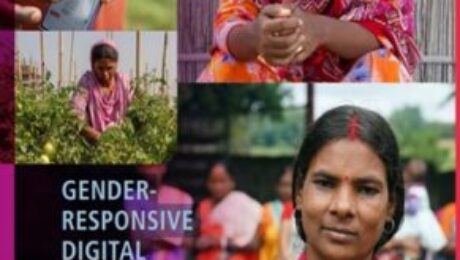
This paper jointly written by the Centre for Research on Innovation and Science Policy (CRISP), Hyderabad, India, and the Food and Agriculture Organization of the United Nations (FAO) explores the gender responsiveness of digital EAS in two Southern Asian countries – Bangladesh and India – where women play a critical role in agrifood systems.
Both countries have piloted and scaled various digital EAS models over the past decade. The study investigated the barriers that limit women’s uptake and effective use of these services.
- Published in NEW PUBLICATIONS
Research Series 74: Women’s empowerment, food systems, and nutrition

This publication aims to contribute to the improved understanding, dissemination and use of PFP as a development tool in particular in the case of school meals programmes. In Volume 1, researchers, policymakers and development partners can find evidence on how PFP can be used as a development tool and deliver multiple benefits for multiple beneficiaries. It argues that PFP can provide a market for local and smallholder farmers, promote the conservation and sustainable use of agrobiodiversity, and improve the nutrition and health of children and communities. Volume 2 of this publication, available at https://doi.org/10.4060/cb7969en, presents further analysis of the instruments, enablers and barriers for PFP implementation. It also provides case studies with local, regional and national experiences from Africa, Asia, Europe and North and South America.
- Published in NUTRITION
Public food procurement for sustainable food systems and healthy diets – Volume 1
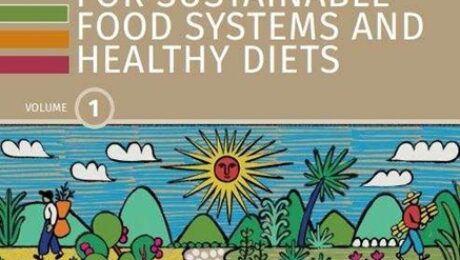
This publication aims to contribute to the improved understanding, dissemination and use of PFP as a development tool in particular in the case of school meals programmes. In Volume 1, researchers, policymakers and development partners can find evidence on how PFP can be used as a development tool and deliver multiple benefits for multiple beneficiaries. It argues that PFP can provide a market for local and smallholder farmers, promote the conservation and sustainable use of agrobiodiversity, and improve the nutrition and health of children and communities. Volume 2 of this publication, available at https://doi.org/10.4060/cb7969en, presents further analysis of the instruments, enablers and barriers for PFP implementation. It also provides case studies with local, regional and national experiences from Africa, Asia, Europe and North and South America.
- Published in NUTRITION
Improving maternal nutrition in India through integrated hot-cooked meal programs: A review of implementation evidence
A notable approach to addressing maternal undernutrition during pregnancy in India in recent years has been the integration of hot-cooked meals (HCM) for pregnant and lactating women together with the provision of other health/nutrition services. Called the One Full Meal (OFM) program, these efforts aim to improve maternal nutrition and health across India by bundling center-based HCM with other nutrition services and behavior change communication implemented through the Integrated Child Development Services (ICDS) scheme. The program is offered at anganwadi centers (AWCs) and has been implemented in eight states in India, including Andhra Pradesh, Chhattisgarh, Gujarat, Karnataka, Maharashtra, Telangana, Madhya Pradesh, and Uttar Pradesh. Although the OFM program has been implemented since 2013, there is limited consolidated insight on its effectiveness or on broader lessons for implementation. The objectives of this evidence review of the OFM program are, therefore, to (1) compare the different state OFM program models on their objectives, implementation elements, cost norms and monitoring mechanisms; (2) develop program impact pathways on the potential ways in which the program could influence intended outcomes; and (3) examine the availability of evidence underpinning the program’s intended pathways to impact.
- Published in NUTRITION
Transforming Food Systems for a Rising India
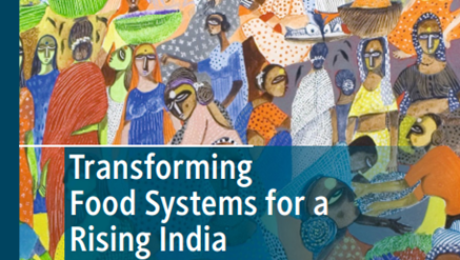
This book explores various challenges and opportunities to achieve a nutrition-secure future through diversified production systems, improved health and hygiene environment and greater individual capability to access a balanced diet contributing to an increase in overall productivity.
The authors bring together the latest data and scientific evidence from the country to map out the current state of food systems and nutrition outcomes. They place India within the context of other developing country experiences and highlight India’s status as an outlier in terms of the persistence of high levels of stunting while following global trends in obesity. This book discusses the policy and institutional interventions needed for promoting a nutrition-sensitive food system and the multi-sectoral strategies needed for simultaneously addressing the triple burden of malnutrition in India.
Creating Enabling Environments for Nutrition-Sensitive Food and Agriculture to Address Malnutrition
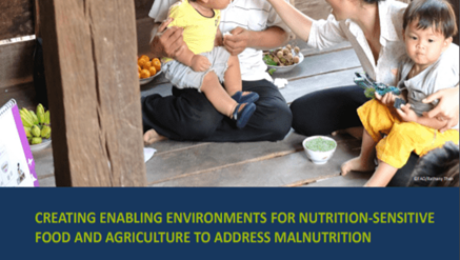
A contributing factor to malnutrition in the Asia and the Pacific region is a lack of crop diversity, which leads to a lack of diversity in diets as well. A major reason for this is that many countries in the region only focus on cultivating a small number of staple foods. Diversifying local crops is a cost-effective and sustainable way to strengthen local agriculture and food systems and combat malnutrition. The first step in supporting local agriculture and food systems by promoting crop and dietary diversification as a means of reducing malnutrition is creating an enabling environment to do so. This TCP project aimed to facilitate the development of this environment through the forming of links, the closing of gaps, and the development of policy recommendations in four countries in the Asia and the Pacific Region: Cambodia, Lao People’s Democratic Republic, Myanmar and Nepal. Its design included national policy reviews, evidence-based studies, and field studies to assess the existing issues related to crop diversity, dietary diversity and malnutrition, and their interdependence, as well as the preparation of national reports and policy documents to be synthesized and disseminated in the region. Drawing on FAO’s previous experience in the region, this project was based on a multisectoral, holistic food system approach that takes into account every step of the food value chain. It involved international development and research institutes, local and national ministries, Non-governmental Organizations (NGOs) and all actors along the food value chain. A major focus of the project was the identification of Neglected and Underutilized Species (NUS) that could be cultivated in the targeted countries and integrated into national policies on food and agriculture. In addition to supporting bio- and production diversity, NUS also address malnutrition, owing to the fact that they can provide essential vitamins, micronutrients and protein. Many are also climate resilient, sustainable, locally available, adaptable to marginal conditions and have commercial potential. These NUS are classified as Future Smart Foods (FSFs), and the project promoted their cultivation, as well as their integration and mainstreaming into national policies and plans.
- Published in NUTRITION