
Building Competence and Confidence in Agricultural Innovation | Stories of change
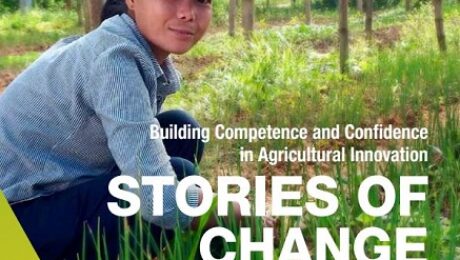
The manuals are intended as working documents. The project supported the development of the Common Framework on Capacity Development for Agricultural Innovation Systems of the Tropical Agriculture Platform, and tested it in eight pilot countries. One key finding was that the framework requires adaptation in each country situation, and as such the manuals are intended as general guides only .
- Published in EXTENSION AND INNOVATION
Developing capacities in agricultural innovation systems: scaling up the Tropical Agriculture Platform Framework”: the EU-funded TAP-AIS project
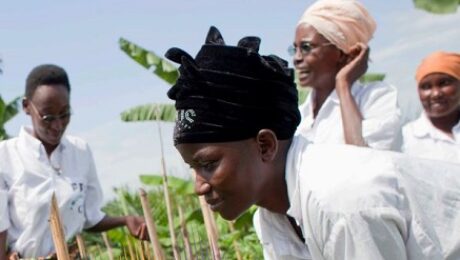
The TAP-AIS project is funded by the European Union (EU) and implemented by the Food and Agriculture Organization (FAO) of the United Nations.
The project evolves from the experience of the EU-funded Capacity Development for Agricultural Innovation Systems (CDAIS) project, which successfully tested and validated the TAP Common Framework on capacity development for agricultural innovation systems in eight countries (Angola, Bangladesh, Burkina Faso, Ethiopia, Guatemala, Honduras, Laos and Rwanda).
The TAP-AIS project is developed under the EU initiative “Development Smart Innovation through Research in Agriculture (DeSIRA): Towards climate-relevant Agricultural and Knowledge Innovation Systems”.
The objective of DeSIRA is to contribute to climate-relevant, productive and sustainable transformation of agriculture and food systems in low and middle-income countries.
DeSIRA supports research and innovation projects in Africa, Asia, Latin America and contributes primarily to the achievement of the following SDGs.
- Published in CAPACITY DEVELOPMENT, EXTENSION AND INNOVATION
Can an incremental approach be a better option in the dissemination of conservation agriculture?

Despite several efforts for its dissemination, adoption of conservation agriculture (CA) in the Middle East and North Africa (MENA) region is low – causing some to wonder if an incremental approach for adoption of its three components would prove more effective. In this paper, we apply the endogenous switching regression model to a nationally representative sample of 1901 wheat fields in Morocco to analyze the impacts of partial or full adoption of all three components of the CA system. We also employ an ordered probit model to identify the determinants of partial and full adoption of CA. Model results show that adoption of the complete CA system leads to 307 kg/ha (35 %) higher yields, US$99/ha (44 %) higher gross margins, and 23 kg/capita/year (38 %) more consumption of wheat relative to the conventional system. Our results also show that adoption of only two principles of the CA system leads to higher benefits in all the livelihood indicators listed above compared to adoption of only one or none of the principles. Likewise, adoption of only one principle is more beneficial than the conventional system. Along with biophysical and environmental benefits documented elsewhere, our results demonstrate that the CA system can provide large economic, social, and food security benefits both at individual household and national levels. Therefore, wider diffusion of the full CA system involving zero tillage (ZT), crop rotation, and crop residue retention has potential to sustainably improve the viability of agriculture in the drylands of Morocco and other similar countries in the MENA region. Given that the CA system is complex and knowledge-intensive, transition from the conventional system to CA requires the following: (1) flexibility to let farmers incrementally adopt one or more of the CA components, learn at their own pace, use some of the benefits, and improve it over time to exploit the full potential of the CA system with close follow-up and technical support from experts and extension specialists; and (2) sustained policy and institutional supports that provide incentives for farmers to adopt and for the private sector to be actively involved, especially in service provision.
- Published in EXTENSION AND INNOVATION
Advances in fruit breeding in Nepal
Nepal has spent about six decades on fruit development and research in different species. Fruit breeding particularly local and exotic germplasm collection started after 1950s and has gained momentum after the formation of commodity programme in 1972 AD. Major researches in the past were focused on indigenous and exotic genotype collection, evaluation, selection, propagation protocol standardization and adoptive trials. Some good ground works have already been done in major fruits such as apple, pear, plum, persimmon, kiwifruit, citrus, litchi, guava, pomegranate, walnut, papaya, banana and mango. The major public institutions involved in fruit breeding are Nepal Agricultural Research Council (NARC) following Agriculture and Forestry University. Some of the private nurseries like Everything Organic Nursery, Kavre and Technology Demonstration Centre of ICIMOD, Lalitpur were also involved in introduction and maintenance of indigenous and exotic fruit species. National Centre for Fruit Development, Kirtipur; Tropical Region Horticulture Centre, Nawalpur; Temperate Horticulture Farm, Satbanj, and Horticulture Farm, Marpha collected many local and exotic fruits and maintained at field gene bank. Horticulture Research Station, Rajikot has introduced 25 spur type apple cultivars and maintained in field gene bank. National Citrus Research Programme, Paripatle has introduced, collected and maintained 130 genotypes including exotic and indigenous landraces of citrus. Two varieties of acid lime ‘Sunkagati-1’ and ‘Sunkagati-2’ have been released and one variety ‘Terhathum Local’ has been registered. ‘Khoku Selection’ of mandarin orange has also been registered. Banana varieties ‘Malbhog’, ‘Willium Hybrid’ and ‘G9’ has been selected by participatory varietal selection and registered. To strengthen fruit breeding in the nation, NARC needs to be restructured with special focus on fruit researches. Establishment of national fruit commodity programs along with establishment of Tropical Fruit Research Station in Province 2 and Temperate Fruit Research Station in Province 5 at national level can streamline NARC’s fruit breeding researches.
- Published in EXTENSION AND INNOVATION, NEPAL
Transformation as system innovation: insights from Nepal’s five decades of community forestry development

Studies of sustainability transitions and transformational change are common in energy and transport sectors. However, there is limited research on how these transformational change processes play out in the natural resources sector, particularly in developing economies. This paper seeks to address this gap, with a case study of the community forestry system in Nepal that has, over the last four decades, reversed Himalayan land degradation and contributed to community livelihoods. The case illustrates comprehensive changes in forest management practices and governance over four decades. Central to this was a ‘thinking movement’ of development agencies, activists and researchers that opened up learning spaces and engage conflicting stakeholders in action-oriented dialogues. While transformation can never be pre-engineered, this study suggests that investment in strengthening locally engaged research capability could be a key way of catalyzing sustainability transitions, both as a continuous process of evolution and transformative shifts during the crisis and political opportunity.
- Published in EXTENSION AND INNOVATION, NEPAL
Fall armyworm management: Farmer field school experiences in Africa

A technical brief on fall armyworm management from the lens of farmer field schools that outlines successes from previous projects in sub-Saharan Africa. Different control methods and traditional recipes for fall armyworm management are highlighted.
- Published in EXTENSION AND INNOVATION
Adding Value to Local Action-How GFRAS promotes advocacy and leadership in rural advisory services for sustainable development
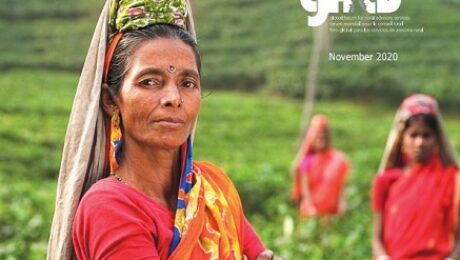
This document describes several real-life examples that illustrate some of the different ways in which the GFRAS network adds value to the work of local actors and ongoing initiatives, with the aim of benefiting the lives and livelihoods of smallholder farmers around the globe.
The Global Forum for Rural Advisory Services (GFRAS) is about enhancing the performance of agricultural extension and advisory services to better serve farming families and rural producers, thus contributing to improved livelihoods in rural areas, the sustainable reduction of hunger and poverty, and working towards reaching the Sustainable Development Goals. Rural advisory services (RAS) help to empower farmers and integrate them more fully in systems of agricultural innovation.
- Published in EXTENSION AND INNOVATION
Making extension and advisory services nutrition-sensitive 2021
Human nutrition is vital for agriculture. Many smallholder farmers are food-insecure and suffer chronic or acute forms of malnutrition. This can permanently harm the physical and cognitive growth of children, while reducing productivity as household members are less able to carry out agricultural work.
Agriculture is vital for human nutrition. Nutrition has long been considered mostly a health issue. However, agriculture plays an essential role in ensuring nutritional wellbeing not only for rural populations, but also for society as a whole.Beyond producing food in sufficient quantity, agri-food systems should also:
- provide diversified, safe and nutritious foods;
- improve rural incomes and resilience, and thus enhance access to healthy diets;
- make foods that contribute to healthy diets available and accessible at national and sub-national levels.
To this end, we must build the capacities of farmers, agriculture extensionists, consumers and others, encourage innovation, investments and enabling policies, and address gender issues. Nutrition-sensitive agriculture (NSA) uses a food-based approach to agricultural development to make the global food system produce better nutritional outcomes.
- Published in EXTENSION AND INNOVATION, NUTRITION
Coordinating pluralism in extension and advisory services FAO (2021)
The publication is a part of the FAO work to assist the member countries in reforming their national Extension and Advisory Services (EAS). It highlights the main elements and provide concrete guidelines for the policy makers to coordinate pluralism in extension and advisory services (EAS), i.e. ensuring that multiple EAS providers from public, private sector and NGOs/donors, provide quality services that contribute to national agricultural priorities and wellbeing of rural producers, collaborate and exchange information to maximise synergies and minimise gaps and duplications.
- Published in EXTENSION AND INNOVATION
Innovations in Agricultural Extension
A group of extension programming staff, specialists, and directors as well as leaders in the field of agriculture collaborated at the International Conference on Agricultural Extension: Innovation to Impact, jointly organized by the National Institute of Agricultural Extension Management (MANAGE), and Michigan State University (MSU) Extension, East Lansing, Michigan, U.S.A, at MANAGE, Hyderabad, India. This book, Innovations in Agricultural Extension, was imagined at the conference. Authors from Kyrgyzstan, Tajikistan, India, Mozambique, Nepal, Nigeria, and the United States of America contributed to the book, eventually co-published in 2021 by MANAGE and MSU Extension. Its 20 chapters cover a wide range of topics such as an overview of agricultural extension, community outreach and advisory services, case studies of agricultural programs and initiatives, community and government engagement, information and communication technology, agritourism, entrepreneurship, and professional development, among others.
This book showcases best practices in extension with the goal that extension professionals are inspired by and learn from programming examples across the globe.
- Published in EXTENSION AND INNOVATION