A Guide to Genetic Resources
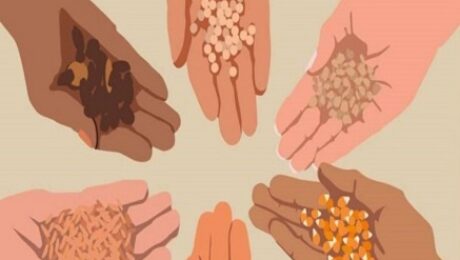
This guide lays out the importance of genetic resources to protect human needs, by explaining how they underpin our food and nutritional security while sustaining our environments. It also explains how the public and private sectors can work together to conserve and share the benefits of these critical resources for future generations.
- Published in GUIDE/TOOLS/MANUALS, ICTs
Guidelines on data disaggregation for SDG Indicators using survey data
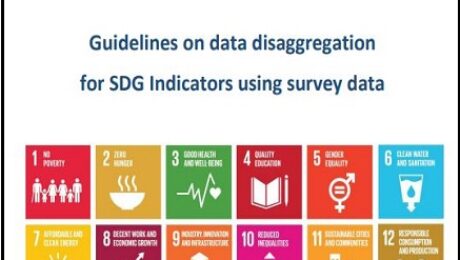
the working group on data disaggregation, the Food and Agriculture Organization of the United Nations (FAO) has taken numerous steps towards supporting Member Countries in the production of disaggregated estimates. Within this framework, these Guidelines offer methodological and practical guidance for the production of direct and indirect disaggregated estimates of SDG indicators having surveys as their main or preferred data source. Furthermore, the publication provides tools to assess the accuracy of these estimates and presents strategies for the improvement of output quality, including Small Area Estimation methods.
- Published in GUIDE/TOOLS/MANUALS, ICTs
Training Module on Facilitation for Development
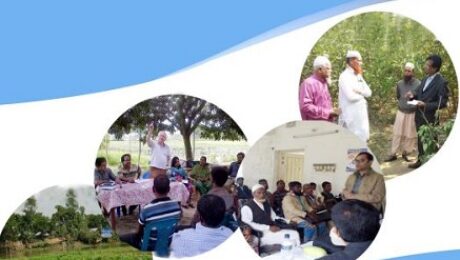
Development is the process of change and facilitation helps in accelerating this process through the change agents‘ or the extension service provider. While working with farmers, agri-traders and processors, facilitation refers to promote group learning, building consensus and enhancing participation in collective actions. A facilitator has multidimensional roles to play.
The module has been prepared to assist facilitators/ trainers engaged in training of agricultural extension and advisory services (EAS) staff and other mediators on facilitation for development by enhancing their knowledge on how to facilitate change in individuals, groups and organizations and also to facilitate multi-stakeholder engagements through brokering strategic partnerships and networking. While working through this module the trainers will find the relevance of facilitation for development in the context of agricultural innovation services (AIS).
- Published in GUIDE/TOOLS/MANUALS
A practical tool to enhance the chances of success of digital agriculture interventions for sustainable development in Africa and India
Effective and sustainable tools, mechanisms and strategies are needed to significantly improve the prevailing agricultural productivity, farmer remuneration, and food availability globally to be able to meet the food, livelihood, and nutritional needs of the projected population in coming decades. Digital agriculture has the potential to efficiently bring together the benefits of the advances in agricultural research and the developments in information and communication technology space to help positively transform the entire spectrum of pre-farm to post-fork activities in the agriculture sector. Through interactions with over 338 stakeholders across India and Africa, supplemented with study of various digital agricultural interventions across the globe, the author observed that most digital agricultural interventions did not succeed, causing great loss of time and resources, which the world can ill afford. The world is falling behind on achieving the Sustainable Development Goals (SDGs). Drawing lessons from the failures and successes of the past digital agricultural interventions, the author has developed an innovative MS Excel tool called HeDAPSEE, to help estimate the success of a digital agricultural intervention before implementing it. This can help strengthen it in planning stages and enhance its chances of success.
- Published in GUIDE/TOOLS/MANUALS, ICTs
WHAT IS A ‘GOOD PRACTICE’? A framework to analyse the Quality of Stakeholder Engagement in implementation and follow-up of the 2030 Agenda
Developed by UN DESA and UNDP, this analytical framework is a tool to enable governments, stakeholders and development partners to examine and strengthen the quality of their stakeholder engagement practices at different stages of the 2030 Agenda cycle, including considering the impact of COVID-19. It is hoped that this tool will help improve stakeholder engagement practices, foster dialogue, and support the sharing of lessons learned and good practices. Readers and users are strongly encouraged to share their feedback on and experiences with the framework with us so we can document them on an ongoing basis in a dedicated space on the SDG16 Hub.
- Published in GUIDE/TOOLS/MANUALS
Operational guidelines on IFAD’s engagement in pro-poor value chain development

These guidelines address recommendations on ensuring that IFAD’s pro-poor value chain development projects reach out to women and the very poor, apply a programmatic approach when needed, promote an inclusive value chain governance, work with the appropriate expertise and partners, and build capacity for implementation.
- Published in GUIDE/TOOLS/MANUALS
Code of Practice for Fish and Fishery Products
The Codex Alimentarius, “the food code”, has a fundamental role in protecting consumers all around the world and ensuring fair practices in food trade. The Code of Practice for Fish and Fishery Products is the essential reference point for technical guidance on the harvesting, processing, transport and sale of fish and fishery products.
- Published in GUIDE/TOOLS/MANUALS, LIVESTOCK / FISHERIES
Empowering Farmers and Their Organizations through the Creation of Social Capital
Social capital is a key factor that concerns the ability of people to cooperate for common goals. What we have learned over the past decades, from organizational experiences in developing countries and countries in transition, is that physical and human capital accumulation by itself is not sufficient to induce development. Investments in physical capital (infrastructure and equipment) and human capital (skills development) are necessary conditions, but they are far from sufficient; they need to be complemented with the development of social capital (Stiglitz, 1998). This Learning Guide for Trainers focuses on “Empowering farmers through the creation of social capital,” recognizing the fundamental role that social capital plays for healthy and sustainable organizations. Encouraging farmers and their groups to form associations or federations enhances their capacities to learn from each other, exchange reliable information about what works and what does not work, and monitor the accountability of their members.
- Published in GUIDE/TOOLS/MANUALS
Catalysing young agri-entrepreneurs’ investments and ensuring their sustainability – Strategic planning tool
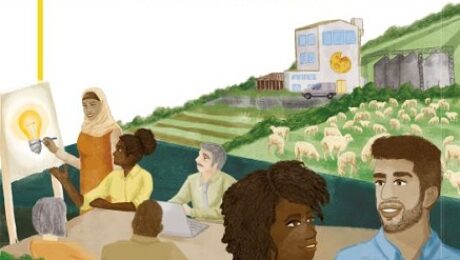
The achievement of the first two Sustainable Development Goals (SDGs) – end poverty and hunger by 2030 – requires substantial investments. To fully contribute to sustainable development, both public and private investments should be perfectly aligned with the SDGs. In this context, empowering youth to invest in their own farms and businesses along agricultural value chains should be a key component of sustainable development-centered investment promotion and mobilization strategy for three reasons: the improvement of food security; the promotion of the added value of food products; and the improvement of employment and economic well-being.
This strategic planning tool can help propel investments by young agri-entrepreneurs at national or regional levels, and help ensure their sustainability. It analyses the current environment and overall conditions young investors face while offering practical solutions to overcome the main challenges identified. The strategic planning tool also helps ensure that decision-makers take ownership of the results through a participatory and inclusive process.
- Published in GUIDE/TOOLS/MANUALS
Increasing the benefits and sustainability of irrigation through the integration of fisheries
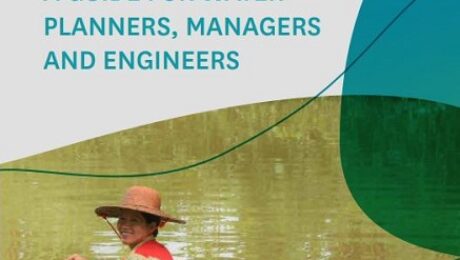
This guide is a contribution to two CGIAR Research Programs: Fish Agri-Food Systems (FISH) (led by WorldFish) and Water, Land and Ecosystems (WLE) (led by IWMI), both of which are supported by funders contributing to the CGIAR Trust Fund.
This guide focuses on how to sustainably optimize and broaden the range of benefits from irrigation development – not only economic but also social and environmental benefits. It emphasizes the opportunities that fisheries could provide to increase food production and economic returns, enhance livelihoods and public health outcomes, and maintain key ecosystem services. The guide considers possible trade-offs between irrigation and fisheries, and provides recommendations on how these can be minimized.
- Published in GUIDE/TOOLS/MANUALS, LIVESTOCK / FISHERIES