
Climate resilience and disaster risk analysis for gender-sensitive value chains
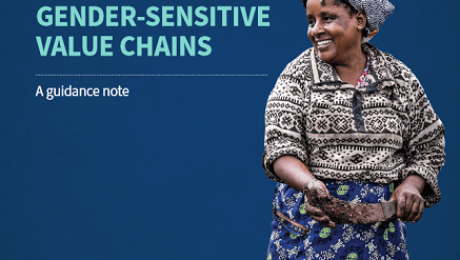
The purpose of this publication is to facilitate gender analysis in value chain operations, considering climate change effects, in order to enhance adaptive capacities of value chain actors. It aims to facilitate the analysis of the factors that determine gender-differentiated vulnerability to climate change and risks. It is intended for use by practitioners and service providers, including governments, civil society and academia, to guide interventions within the agrifood sector.
- Published in GENDER, VALUE CHAIN / MARKETS
Youth and Jobs in Rural Africa
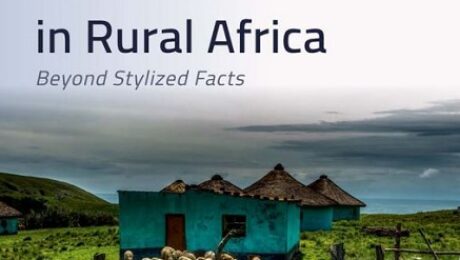
The prospect of widespread youth unemployment in Sub-Saharan Africa (henceforth ‘Africa’) is a serious concern for governments today, both on the subcontinent and in developed countries. Underlying this is a sense of alarm or urgency, borne out of the view that Africa’s ‘youth bulge’ is an unprecedented global challenge, and that African economies will struggle to absorb enough young job seekers in the coming decades. Concerns are particularly pronounced in rural Africa, where most of the world’s poor population reside and where farming is still the main livelihood for most households. The conventional view is that African youth do not aspire to work in agriculture, because the sector is characterized by low productivity and is far from the dynamic lifestyles offered by cities. Yet job prospects in Africa’s cities and towns are also limited, and so most young Africans will inevitably need to find work somewhere in the rural economy.
- Published in YOUTH
Engendering Agricultural Development Dimensions & Strategies

The book comprises of three divisions viz., Gender in agriculture development (Part I), Gender in allied sectors of agriculture (Part II) and Data, tools and approaches in gender analysis (Part III) that explicates the prevalent gendered relegations. It provides insights on the gender dimensions in Indian agriculture, including initiatives, policy reforms and mends the literature gap in gender roles in the sector. The gender roles and impacts from different cultural and geographical horizons of Indian agricultural and allied sectors in the emerging contexts of globalization, urbanization, climate change and the Covid19 pandemic are gathered in this book.
- Published in GENDER
How Far Gender Inequality Suppresses Human Development: Evidence from India
In Indian society, the root cause of gender inequality lies in its patriarchal structure. In this paper, an attempt has been made ment, to a certain extent, to link gender relations with the development of the nation. Furthermore, it examines the spatial variations of gender development and analyzes spatial inequality at the level of human development in the different states of India. Finally, this paper has suggested some important policy implications for reducing gender inequality in India. The Gender Parity Index (GPI) of literacy has been calculated to understand the inequality between the two genders. The Human Development Index (HDI) method has been used to analyze spatial variation in the development of human resources. The study reveals that there are considerable disparities in the level of human resource development among the different states of India, and higher-income states do not show the highest HDI values. The measure to reduce gender inequality in rural India must be developed and implemented according to the needs of specific target groups, that is, women and children.
Women’s leadership and gender equality in climate action and disaster risk reduction in Africa
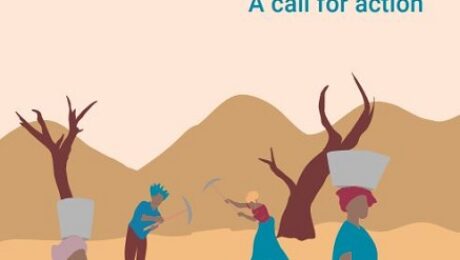
Despite the key roles that rural women play in food systems, in agrobiodiversity conservation, natural resource management, food production, preparation and marketing, rural women are particularly affected by the impacts of climate change due to limited access and control over resources fundamental to adaptation and limited participation in decision-making processes. Similarly, they lack equal access to productive resources needed for agricultural livelihoods, and are often the last to eat when food is scarce. Decision-making and leadership in climate action and governance are also male dominated and the decisions less likely to respond to women’s needs and wants.
It is therefore urgent to ensure that policy and programmatic response for building back better and strengthening the resilience of food systems and communities takes into account the interests and constraints of women and men from diverse social, cultural, ethnic and religious backgrounds. For this to happen, it is important to strengthen women’s leadership and participation at all levels of climate action and governance.
- Published in GENDER
Advancing Gender Equality through Agricultural and Environmental Research: Past, Present, and Future

Current data suggests that the global community is far from achieving the 2030 agenda of ending hunger, food insecurity, and malnutrition. By the end of 2019, 650 million people suffered from chronic hunger and 135 million experienced acute food-insecurity. Not all regions are equal: the Global Hunger Index (GHI) 2020 found that some are experiencing less severe incidence of hunger on the GHI scale, compared to others. The most serious levels of hunger are in Sub-Saharan Africa and South Asia. This brief focuses on South Asia. It analyses the factors underlying the so-called ‘South Asian Enigma’—the paradoxical co-existence of hunger and malnutrition amidst economic prosperity—and dissects the disproportionate impacts on women.
- Published in GENDER
Gender Gap in Agriculture and the ‘South Asian Enigma

Current data suggests that the global community is far from achieving the 2030 agenda of ending hunger, food insecurity, and malnutrition. By the end of 2019, 650 million people suffered from chronic hunger and 135 million experienced acute food-insecurity. Not all regions are equal: the Global Hunger Index (GHI) 2020 found that some are experiencing less severe incidence of hunger on the GHI scale, compared to others. The most serious levels of hunger are in Sub-Saharan Africa and South Asia. This brief focuses on South Asia. It analyses the factors underlying the so-called ‘South Asian Enigma’—the paradoxical co-existence of hunger and malnutrition amidst economic prosperity—and dissects the disproportionate impacts on women.
- Published in GENDER
Enhancing the Livelihoods of ‘Hidden Women’ in Global Smallholder Value Chains
Women smallholder farmers often face complex social and economic barriers that prevent them from exercising agency and securing decent livelihoods. This Discussion Summary Paper draws from an online discussion co-hosted by Business Fights Poverty, Unilever and Oxfam, on how companies and their partners can recognize, value, and enhance the contributions of the hidden women on whom our global food supply systems depend. Read it to learn about the key levers of change, case studies and lessons learned, and how to collaborate for transformational change.
- Published in GENDER
Beyond COVID-19: A feminist plan for sustainability and social justice

As the world learns to live with COVID-19, to emerge from the current crisis, and to “build back better”, UN Women’s new “Feminist plan” provides a visionary but practical roadmap for putting gender equality, social justice, and sustainability at the centre of the recovery and transformation.
COVID-19 has revealed and worsened inequalities and is a reminder of just how unsustainable and fragile the world’s economies and democracies are. The crisis also provides a warning about what is rapidly coming down the track on climate change and environmental degradation. This has created both a need and an opening to rethink economic and social policies and re-evaluate what needs to be prioritized.
The “Feminist plan” maps the ambitious and transformative policies—on livelihoods, care, and the environment—that are needed to build a more equal and sustainable future. To get there, it calls for context-specific policy pathways, tailored political strategies, and financing. The plan identifies key levers that can create change and the actors at global, national, and local levels that need to take action to move towards this vision.
- Published in GENDER
A systematic review of labor-saving technologies: Implications for women in agriculture
In this study, we systematically review the literature on adoption factors and impacts of labor-saving technologies (LSTs) by smallholder and women farmers in developing countries. 85 articles are included in the review after meeting strict selection criteria through a search across several electronic platforms. We highlight several research gaps that need future research focus. Future research should include gendered differences in factors such as – comparing extension models, social networks, and farmers’ underlying technological perceptions. We show the need for designing and providing access to gender-friendly LSTs suited to the context. While there are clear impacts of LST adoption on labor and productivity, few studies examine negative consequences such as labor-displacement. Further examination of these trade-offs and differential impacts on welfare dimensions across gender is needed. Our results indicate implications for future research and policy regarding incorporating gender differences in designing, promotion, and adoption of LSTs to reduce women’s work burdens and to enhance welfare outcomes.
- Published in GENDER