
Investigating the roles and challenges of female extension workers: a systematic review
As the demographics of farming communities change and innovations evolve, the role of female extension workers becomes more critical, especially in reaching out to women farmers who are often primary agricultural laborers in rural households and supporting them to adopt new practices and technologies. This study investigates how the roles and challenges of female extension workers are represented in the literature and what assumptions and implications underpin these representations.
- Published in GENDER, NEW PUBLICATIONS
Smart Agricultural Technology
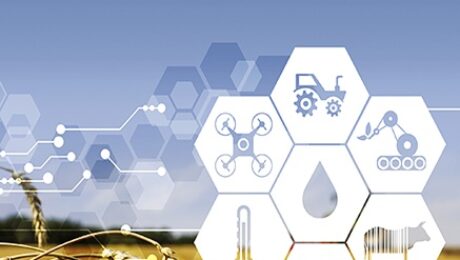
Agriculture is undergoing a rapid digital transformation that challenges its ecological, social, and ethical foundations. A total of 136 documents were analysed through bibliometric and thematic synthesis. Results show that A5.0 represents a philosophical and structural evolution beyond the efficiency-oriented logic of A4.0, integrating distributed computing, explainable artificial intelligence, digital twins, and collaborative robotics within ecologically restorative and socially inclusive frameworks. However, while A5.0 strengthens resource efficiency, resilience, and certain social segments through open-source technologies and participatory design, gaps remain in policy coherence, emotional engagement, and human–machine co-learning. To address these, the study proposes two complementary agroecological principles, cognitive symbiosis and emotional ecology, emphasising shared intelligence and affective stewardship between humans, machines, and ecosystems. Overall, Agriculture 5.0 reframes digitalisation as a human-ecological partnership that can operationalise agroecology’s ethical goals if governed by inclusion, transparency, and regeneration rather than control and optimisation.
- Published in AGROECOLOGY, NEW PUBLICATIONS
Training Module on Value Chain Extension
Agriculture is critical tothe overall development and transformation of Odisha. With crops covering 35 per cent of the state’s geographical area and more than 60 per cent of its workforce depending on farming for livelihood, the welfare of Odisha’s people cannot be separated from its agriculture. The State Government is keen to increase agricultural production and raise incomes and productivity by leveraging science and technology, improving resource use efficiency, diversifying to high value agriculture and supporting efficient functioning of agricultural markets.
- Published in GUIDE/TOOLS/MANUALS, VALUE CHAIN / MARKETS
Training Module on Facilitation for Development
Agriculture is critical to the overall development and transformation of Odisha. With crops covering 35 per cent of the state’s geographical area and more than 60 per cent of its workforce depending on farming for livelihood, the welfare of Odisha’s people cannot be separated from its agriculture. The State Government is keen to increase agricultural production and raise incomes and productivity by leveraging science and technology, improving resource use efficiency, diversifying to high value agriculture and supporting efficient functioning of agricultural markets.
- Published in GUIDE/TOOLS/MANUALS
Training Module on Designing and Delivering Gender-Responsive Extension and Advisory Services (EAS)
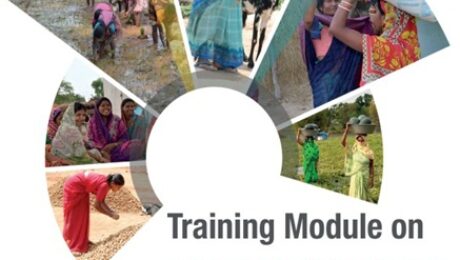
The overall aim of this Manual is to develop capacities to identify, integrate, and address gender issues in Extension and Advisory Services (EAS). This Module is intended to assist trainers involved in training of agricultural extension and advisory services (EAS) staff and other knowledge mediators on designing and delivering a Gender-Responsive EAS.
- Published in GENDER, GUIDE/TOOLS/MANUALS
Training Module on Climate Smart Agriculture
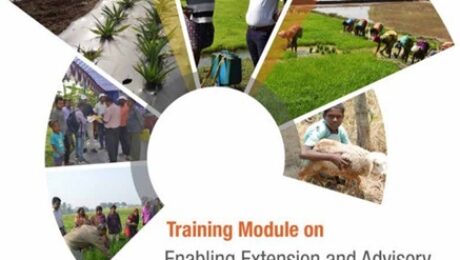
Extension and Advisory Services (EAS) play a major role in strengthening technical, managerial and organisational capacities of farmers, who need frequent renewal of capacities to deal effectively with the evolving challenges faced by rural communities. Based on a systematic Capacity Needs Assessment of EAS in Odisha, undertaken by the Centre for Research on Innovation and Science Policy (CRISP) and the International Rice Research Institute (IRRI) in 2018-19, a strategy was developed to address the identified capacity gaps.
- Published in CLIMATE CHANGE, GUIDE/TOOLS/MANUALS
Guide for the evaluation of agroecology
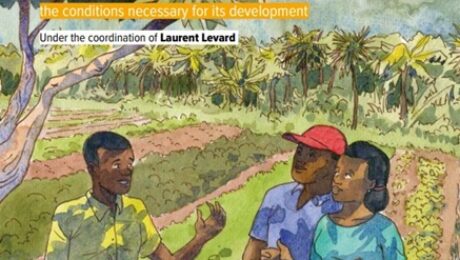
The “Guide for the Evaluation of Agroecology” published in 2025 is a comprehensive manual that provides a standardized methodology to assess the real-world agro-environmental and socio-economic impacts of agroecological practices. It offers practical tools to help farmers, practitioners, researchers, and policymakers to generate reliable data on critical aspects. This invaluable resource is designed to build a robust evidence base, supporting the effective design and scaling of sustainable agricultural systems.
- Published in AGROECOLOGY, MONITORING & EVALUATION
Preparing Youth for Agri-preneurship Development

Agriculture has long been the backbone of India’s economy, sustaining millions of livelihoods and delivering 18.4% (https://www.upag.gov.in/dash-reports/gvaagri) of the nation’s Gross Value Added (GVA) in recent years. It remains the largest source of employment, especially in rural areas. Yet, the sector faces persistent and emerging challenges such as climate change, land degradation, fragmented small land holdings, limited technological integration in farming, optimizing water use, harnessing monsoon rains, over-reliance on monsoons, crop and livestock diseases, post-harvest losses, and highly volatile market prices. Addressing these complex issues requires a workforce that is not only skilled and knowledgeable but also innovative and entrepreneurial underscoring the vital role of agricultural education in securing the sector’s future profitability and sustainability. There is the need for technology integration and entrepreneurship in agriculture to address challenges such as population growth and decreasing land holdings. Also, there is a need to prepare students for future scenarios with limited land availability and the importance of diversifying agricultural education to include animal husbandry. The education system should shift focus from producing job seekers to nurturing job creators through entrepreneurship and startup-ecosystem training. A brainstorming session on “Preparing Future-Ready Youths for Entrepreneurship Development in Agriculture” was organized to stimulate policy innovations and also Institutional reforms in academics, paving way in building students for more meaningful lives and work roles and enabling economic independence of learners capable of global competence. This would encourage higher agricultural education (HAE) Institutions to shape new generation youth in agriculture and allied fields and motivate all stakeholders, educationists, policy makers in contributing to fulfilling the aspiration of the Viksit Bharat.
- Published in AGRIPRENEURSHIP, POLICY, YOUTH
Gender Responsive Digital Extension and Advisory Services in Bangladesh and India
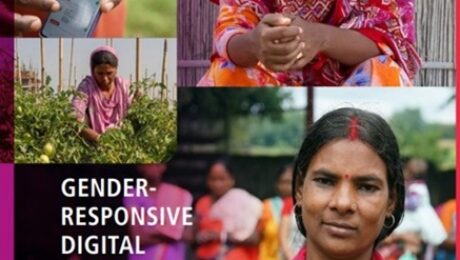
This paper jointly written by the Centre for Research on Innovation and Science Policy (CRISP), Hyderabad, India, and the Food and Agriculture Organization of the United Nations (FAO) explores the gender responsiveness of digital EAS in two Southern Asian countries – Bangladesh and India – where women play a critical role in agrifood systems.
Both countries have piloted and scaled various digital EAS models over the past decade. The study investigated the barriers that limit women’s uptake and effective use of these services. While numerous digital EAS solutions are emerging in both Bangladesh and India, there is limited evidence that women farmers are meaningfully engaging with or benefiting from these services. One key barrier remains women’s limited access to mobile phones, the primary delivery channel for most digital EAS platforms. However, the challenge goes well beyond device ownership.
Manual on Good Practices in Extension Research & Evaluation
This document on Good Practices in Extension Research and Evaluation is developed as a hands on reference manual to help young researchers, research students, and field extension functionaries in choosing the right research methods for conducting quality research and evaluation in extension.
- Published in GUIDE/TOOLS/MANUALS, MONITORING & EVALUATION