Adoption and diffusion of improved technologies and production practices in agriculture

Adoptions of improved technologies and production practices are important drivers of agricultural development in low-income countries like Nepal. Adopting a broad class of such technologies and practices is often critical for meeting the multifaceted goals of efficiency, profitability, environmental sustainability, and climate resilience. This study aims to address the knowledge gaps that still exist concerning what determines the adoption of improved technologies and production practices, the factors affecting their diffusion, the impact of interventions on productivity and crops grown, and the variability of impact within a particular country context. In this paper we address these questions using data collected as part of the USAID-led Knowledge-Based Integrated Sustainable Agriculture in Nepal (KISAN) project. We adopted a multistage sampling technique and surveyed 988 beneficiary households and 997 non-beneficiary households in KISAN intervention districts and non-intervention districts. Our findings suggest that, in Nepal, adoption of improved technologies and practices is significantly increased by improved access to markets, private sector involvement in selling improved seeds and disseminating information, membership in progressive farmers groups and cooperative societies, participation in agricultural training and farm visits, provision of subsidies for seeds, and access to credit. We also found the probability of the adoption of improved practices to be affected by farmers’ sources of information; for instance, the adoption of improved practices was increased when farmers obtained information from informal sources, cooperatives/farmers organizations, and public and private extension programs. The effects of KISAN projects vary significantly across the different crops grown, based on the evaluation models that address self-selection of both project participation and crop choices. These implications may also apply to other parts of the world facing similar challenges as Nepal, where limited market access, insufficient knowledge and resource capacity of farmers constrain their adoption of improved technologies and practices in agriculture.
- Published in POLICY
World Development Report 2021: Data for Better Lives
Today’s unprecedented growth of data and their ubiquity in our lives are signs that the data revolution is transforming the world. And yet much of the value of data remains untapped. Data collected for one purpose have the potential to generate economic and social value in applications far beyond those originally anticipated. But many barriers stand in the way, ranging from misaligned incentives and incompatible data systems to a fundamental lack of trust. World Development Report 2021: Data for Better Lives explores the tremendous potential of the changing data landscape to improve the lives of poor people, while also acknowledging its potential to open back doors that can harm individuals, businesses, and societies. To address this tension between the helpful and harmful potential of data, this Report calls for a new social contract that enables the use and reuse of data to create economic and social value, ensures equitable access to that value, and fosters trust that data will not be misused in harmful ways. This Report begins by assessing how better use and reuse of data can enhance the design of public policies, programs, and service delivery, as well as improve market efficiency and job creation through private sector growth. Because better data governance is key to realizing this value, the Report then looks at how infrastructure policy, data regulation, economic policies, and institutional capabilities enable the sharing of data for their economic and social benefits, while safeguarding against harmful outcomes. The Report concludes by pulling together the pieces and offering an aspirational vision of an integrated national data system that would deliver on the promise of producing high-quality data and making them accessible in a way that promotes their safe use and reuse. By examining these opportunities and challenges, the Report shows how data can benefit the lives of all people, but particularly poor people in low- and middle-income countries.
- Published in POLICY
Local government planning for community food systems
This publication introduces a new knowledge base for understanding food planning and governance processes and models in local governments of low- and middle-income countries, a valuable counterbalance to the prevailing literature and experience from high-income countries. It provides practical insights on the needs, challenges and opportunities in local food planning practice in three countries in Asia, Africa and Latin America and the Caribbean. Based on reported cases, this publication offers a broad guiding framework and a methodology for subnational government bodies.
Food Systems Profile – Nepal

This document, entitled Profile of Food Systems, presents in ten pages a summary of the main problems of Nepal’s food systems, and possible solutions to make them more sustainable and inclusive. The result of a systemic analysis and consultation of all stakeholders in the systems, it is part of an evaluation supported by the European Union, FAO and CIRAD in 50 countries.
- Published in MONITORING & EVALUATION, NEPAL, NUTRITION
Mapping Rural Development: How to use GIS to monitor and evaluate projects
If a picture is worth 1,000 words, then a map must surely be worth far more. Especially if it is a map enriched with data – one that shows what and where activities are planned, are happening, and have been achieved.
This practical manual provides guidance on how to use geographic information systems (GIS) in the monitoring and evaluation of rural development projects. With over 20 maps showing IFAD-funded projects, it describes how to map a project’s activities and how to use the data the map shows. It provides sample geospatial data standards and quality checklists for project designers and managers.
- Published in MONITORING & EVALUATION
Taking a snapshot of Extension and Advisory Systems performance and outcomes
To evaluate pluralistic Extension and Advisory Services (EAS) systems performance and outcomes, and share the experiences made with applying a participatory semi-quantitative approach allowing for cross-country comparability.
Results revealed an overall weak performance on most assessed criteria. Experts pointed out a lack of adequate policies addressing agricultural extension, insufficient funding, and poor infrastructure. On the other hand, the increased focus on sustainability, increased inclusiveness levels, and steady uptake of digitalization technologies are areas where progress was recently made. On the outcomes side, users perceived EAS contributed mainly to acquiring technical skills, while less to entrepreneurial and social skills.
- Published in MONITORING & EVALUATION
Methodological recommendations to better evaluate the effects of farmer field schools mobilized to support agroecological transitions
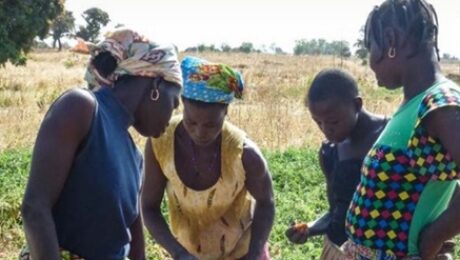
The farmer field school (FFS) approach, based on group experimentation of innovative practices and/or farming systems, is in line with participatory farm advisory efforts. This approach has an ambitious goal: strengthening farmers’ skills so that they can adapt their practices, or even invent new ones, and move towards more agroecological farming systems. Assessing such an advisory intervention poses significant challenges. The purpose of this document is to propose fresh ways to update FFS assessment methods, notably the study of changes in farming practices and the detailed analysis of FFS outcomes. Project designers, managers, and evaluators are the target audience for this document, which may also interest teachers, researchers, students, and policymakers. The elements of the FFS assessment methodology presented here stem from the collaboration between three institutions, CIRAD, FAO (Food and Agriculture Organization of the United Nations), and the NGO AVSF (Agronomists and Veterinarians Without Borders), and fieldwork carried out in cotton-growing areas of Burkina Faso and Togo between 2018 and 2019.
This document is divided into four parts. We first define FSS and the principles of the approach, then we detail the methods commonly used to assess FSS and the challenges involved. We then present a comprehensive assessment method using a case study in northern Togo. The final part of the report provides a basis for placing the proposed method within the process of designing an assessment for a project involving FSS.
- Published in MONITORING & EVALUATION
Achieving Rural Transformation: Results and Lessons from IFAD Impact Assessments
This synthesis draws on 17 recent IFAD Impact Assessments conducted in various countries and production systems to analyse project activities and theories of change.
Overall, this synthesis aims to inform IFAD’s stakeholders about the typology of projects evaluated and lessons learned from them to improve the design of similar future projects and to draw insights into successful drivers of rural transformation.
- Published in MONITORING & EVALUATION
Design and monitor nutrition-sensitive agriculture and food systems programmes
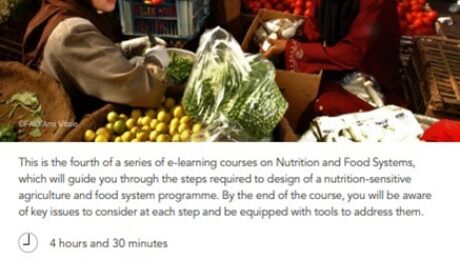
This fact sheet describes the fourth of a series of e-learning courses on Nutrition and Food Systems, which will guide you through the steps required to design of a nutrition-sensitive agriculture and food system programme. By the end of the course, you will be aware of key issues to consider at each step and be equipped with tools to address them.
- Published in MONITORING & EVALUATION, NUTRITION
An integrated approach to ex-post impact assessment
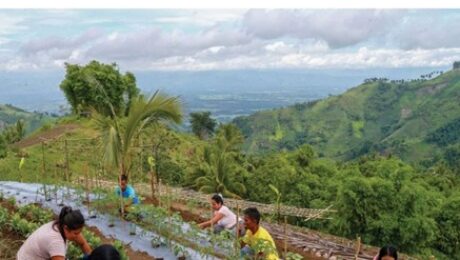
In commissioning this impact evaluation, ACIAR and the Philippine Council for Agriculture, Aquatic and Natural Resources Research and Development (PCAARRD) designed a process that would enable us to jointly review identify, develop and apply impact assessment approaches that explore multiple impacts of complex agricultural research for development investments, including economic, social, environmental, policy and capacity impacts.
The evaluation, published as An integrated approach to ex-post impact assessment, ACIAR Impact Assessment Report No. 102, has 2 parts. Part 1 provides a framework to guide an integrated approach to ex-post impact assessment. It includes insights and lessons from the process of collaboratively developing this framework and in trialling such an approach.
Part 2 provides an example of how the framework was applied to Landcare projects in the Philippines. This section details the experiences of the University of the Philippines, Los Baños and Visayas State University in implementing the integrated approach to impact assessment outlined in Part 1. Part 2 also includes reflections and implications from the Philippines team, based on their experiences implementing the approach.
- Published in MONITORING & EVALUATION