
Research Series Issue 65: Impacts of agricultural value chain development in a mountainous region: Evidence from Nepal

This analysis investigates the potential mechanism and the practical significance of the impacts of agricultural value chain development in a geographically challenging rural area of a developing country.
We use data from a primary survey administered in the hill and mountainous region in Western Nepal. We show that linking small-scale producers with regional and local traders can help increase agricultural income. We unpack the potential mechanism of the impact pathway and show that the increase in agricultural income is a consequence of higher agricultural revenues, owing to a higher volume of sales at lower prices.
The positive impact on household income is practically significant in that it translated into improved food security, dietary diversity and household resilience. Targeted value chain interventions that strengthen and stabilize small-scale producers’ access to markets can contribute to rural poverty reduction via an increase in agricultural income.
- Published in NEPAL
Buy or make? Agricultural production diversity, markets and dietary diversity in Afghanistan
Increasing on-farm production diversity and improving markets are recognized as ways to improve the dietary diversity of smallholders. Using instrumental variable methods to account for endogeneity, we study the interplay of production diversity, markets and diets in the context of seasonality in Afghanistan. We confirm an important seasonal dimension to the interplay. Improved crop diversity over the year is positively associated with dietary diversity in the regular season, but not in the lean season. Livestock species diversity remains important for dietary diversity throughout the year, but particularly so in the lean season when the influence of cropping diversity is low. Market aspects become important for dietary diversity specifically in the lean season.
- Published in AFGHANISTAN, NUTRITION
Patterns of Regional Agri-food Trade in Asia
This paper analyzes the implication of economic structural change and dietary transformation on changing patterns of agri-food trade among 17 Asian development countries. Sub-regional trade in Central, South, and Southeast Asia is the focus of the paper, along with trade with other partners outside the sub-regions. The paper finds that Asian markets for total agri-food exports and exports of nutritious foods are generally more important than the markets outside of Asia and for many of them, the importance of Asian markets increases over time. While net exporters and importers co-exist in each sub-region, with a few exceptions, sub-regional trade is often less important. Many small countries trade only with one or two large neighbors and less so with each other.
The dietary transformation impacts trade in nutritious foods in diverse ways. With income growth, increased domestic demand for nutritious foods seem to lead to more imports of these foods. While many South and Southeast Asian countries have a comparative advantage in exports of some nutritious food products, growth in these exports can be negatively affected by rising domestic demand. Although nutritious food exports continue to play important roles in total agri-food exports, export growth of nutritious food is often slower than overall growth of agri-food exports. The dietary transformation also seems to lead to increases in demand for processed foods which many Asian countries meet through imports, often, accounting for a large component of total agri-food imports. On the other hand, processed foods generally account for a small portion of agri-food exports. However, there are a few countries where processed food export growth is rapid. In these cases, the sub-regional market is expanding, but with few exceptions, it is still less important than trade with countries outside the sub-regions.
- Published in SRI LANKA, VALUE CHAIN / MARKETS
Dysfunctional Horticulture Value Chains and the Need for Modern Marketing Infrastructure: The Case of Nepal
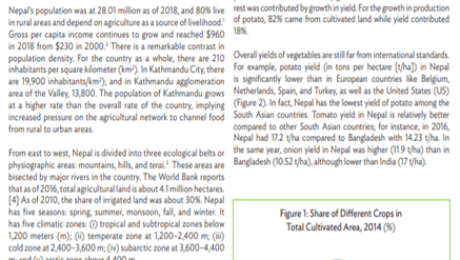
This brief provides an overview of Nepal’s agriculture sector and horticulture value chain, and of four agricultural wholesale markets. It notes that inefficiencies in the value chain lead to high seasonal and spatial price fluctuations for fruit and vegetables, and suggests ways of improving wholesale markets, production, and marketing.
- Published in NEPAL
Value chain and policy interventions to accelerate adoption of zero tillage in rice-wheat farming systems across the Indo-Gangetic Plains

This project aimed to accelerate the adoption of Zero-Till seed drills (including the Happy Seeder) to reduce crop residue burning and boost sustainable food energy water security.
Stubble burning, combined with the traditional practice of tillage prior to crop establishment has a detrimental impact on soil health and quality. The development of Conservation Agriculture (CA) practices, characterised by the direct sowing of crop into standing (retained) stubble, is termed Zero-Till and provides a real alternative to traditional farming techniques. The Happy Seeder developed specifically for the intensive rice-wheat cropping system of the Indo-Gangetic Plains (with significant project investment by ACIAR) is presented as the single most viable option for direct sowing of wheat crops into standing rice stubble. As State Governments move towards enforcing a ban of the burning of stubble across India, it is likely that there will be an increased motivation by farmers to adopt the Happy Seeder. However, experience to date has indicated that Happy Seeder adoption has been less than optimal, there is a need to identify how farmer adoption can be accelerated.
- Published in VALUE CHAIN / MARKETS
Support for the Formulation of Projects for Strengthening Markets and Rural Transformation (Smart) Initiatives In Punjab, Pakistan
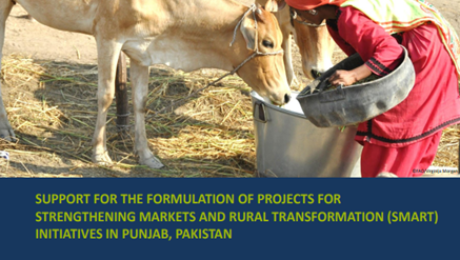
In Pakistan, the agriculture sector accounts for 19.8 percent of the gross domestic product and engages 42.3 percent of the labour force. The Province of Punjab is home to around 54 percent of the population and is the main production area for rice, cotton, sugar cane and mangoes, among other commodities. Moreover, Punjab accounts for 76 percent of national food grain production and over 60 percent of foreign exchange earnings from agriculture.
With the ongoing transformation of the rural landscape, larger farming operations are benefitting from the existing institutional structures to a substantially greater degree than smallholder farmers and both marginalized and landless populations. Acknowledging the requirement to facilitate more inclusive agricultural development, the Government of Punjab has endeavoured to revamp institutional structures to better ensure market liberalization and safeguard poor and marginalized populations. Hence, the Government of Punjab has undertaken the Strengthening Markets and Rural Transformation (SMART) Programme, which envisages policy and institutional reform, as well as increased investment in agriculture, livestock, irrigation and the management of both agroprocessing and supply chains.
- Published in PAKISTAN
Value Chain Approaches for Social Change

Over the past decades, there has been an extensive transformation in global agri-food value chains, resulting in advances in efficiency, food quality, and food safety. Despite this transformation, many farmers and labourers active as primary producers in these chains have not experienced improvements in their living standards. Based on a study conducted in 2020 by KIT Royal Tropical Institute and Oxfam Novib, this paper explores value chain approaches that reduce social inequality and enable smallholder farmers and labourers to have decent livelihoods.
- Published in VALUE CHAIN / MARKETS
Agriculture supply chain risks and COVID-19: mitigation strategies and implications for the practitioners
The agricultural supply chains (ASCs) are exposed to unprecedented risks following COVID-19. It is necessary to investigate the impact of risks and to create resilient ASC organisations. In this study, we have identified and assessed the ASC risks caused by disruptions. These threats were assessed using Fuzzy Linguistic Quantifier Order Weighted Aggregation (FLQ-OWA). The findings reveal that supply risks, demand risks, financial risks, logistics and infrastructure risks, management and operational, policy and regulation, and biological and environmental risks have a significant impact in ASC depending upon the organisations scope and scale. Various strategies such as adoption of industry 4.0 technologies, supply chain collaboration and shared responsibility is identified for sustainable future. Theoretical and managerial implications are provided based on the outcomes of the study.
- Published in VALUE CHAIN / MARKETS
New book on value chain development seeks to translate ideas into practice – for impact at scale
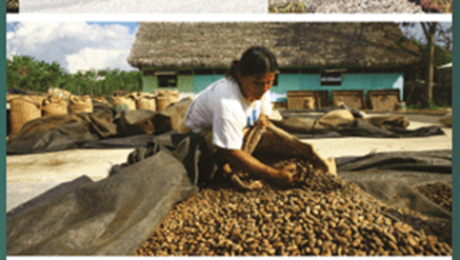
This book looks to fill the gap in the discussions on value chains which have been ongoing for nearly two decades: the need to shed light on how value chain concepts and ideas are translated into development programming and interventions for achieving greater impact at scale. As CGIAR researchers, we felt a commitment for examining value chains from the perspectives of governments, donors, NGOs, and businesses interested in smallholder engagement in value chains.
Dietmar, Jon, and I have been engaged with Practical Action Publishing over the years and highly appreciate their dedication to better development practices, as well as the capacity to get development-oriented books into the hands of practitioners and researchers quickly. We hope that this book encourages reflection on current value chain development (VCD) approaches and on possible innovations in design, implementation, and assessment of VCD outcomes and impacts.
- Published in VALUE CHAIN / MARKETS
Corporate-level Evaluation on IFAD’s Engagement in Pro-Poor Value Chain Development
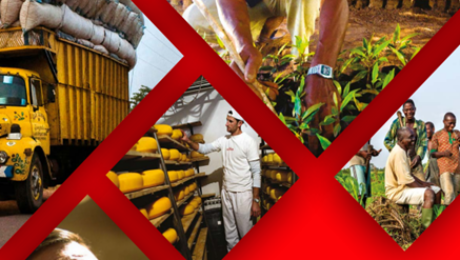
The evaluation found that project design has improved over time, reflecting a better understanding of the value chain concept. However, analytical gaps remain. Few designs have been supported by market intelligence to prioritize the choice of commodities and steps within the value chain in order to achieve pro-poor outcomes.
The evaluation suggests that it is possible to reach out to poor and very poor producers through value chain approaches, but this requires specific attention. The most convincing pro-poor outcomes occurred in projects where IFAD had experience and where multi-stakeholder platforms were created to enable dialogue between value chain actors.
The evaluation recommends that a corporate strategy be prepared for IFAD’s support to pro-poor value chain development that clarifies the objectives and principles of engagement as well as the resources required. It suggests a “programmatic” approach to value chain development, recognizing the need for long-term engagement. Finally, the evaluation emphasizes the importance of promoting an inclusive value chain governance and regulatory environment.
- Published in VALUE CHAIN / MARKETS