Farmers’ Characteristics and Constraints in T-aman Rice Cultivation in Bangladesh
Transplanted Aman (T-aman) rice remains integral to household food access and livelihood resilience in northern Bangladesh, yet its production remains constrained by multiple agronomic and socio-economic challenges. This study examined the intensity of constraints encountered by producers involved in T-aman rice production and analysed their relationships with selected farmer attributes. Information was gathered from randomly selected farmers using a pretested structured interview schedule during October 2012. Farmers’ problem confrontation was assessed using a four-point scale across 15 identified constraints, and a PCI was done to classify problem severity. Pearson’s Coefficient was applied to observe linkages between problem confrontation and farmers’ socio-economic and communication characteristics. Results showed that 72.8% of farmers experienced a medium level of problems, while 27.2% faced a high level of problems in T-aman cultivation. High production cost ranked as the most severe constraint. The rest have negative or no significant association. The findings highlight the importance of strengthening farmer knowledge, extension services, and input quality regulation to reduce production constraints and enhance the sustainability of T-aman rice cultivation in vulnerable regions of Bangladesh.
- Published in BANGLADESH, NEW PUBLICATIONS
Guide to monitoring, evaluation and learning toolkits for grassroots agricultural extension and advisory service systems

The monitoring, evaluation and learning (MEL) system is critical to strengthen field-level agricultural extension and advisory services (EAS) systems and thereby support smallholder farmers’ access to agricultural innovations. However, most national EAS systems often lack efficient MEL tools and capacities to plan and conduct systemic MEL. This constrains smallholder farmers from accessing and uptaking agricultural innovation, technology and services. This knowledge product aims to provide a holistic self-MEL approach to strengthening the agricultural EAS system’s role in supporting the agricultural innovation system at the grassroots level. Therefore, it provides MEL indicator frameworks, tools for data collection and analyses, and guidelines on using the self-MEL toolkits for field-level EAS managers and agents. This guide will improve smallholder farmers’ access and uptake of EAS and contribute to the upscaling of EAS, thereby promoting inclusive innovation-driven agricultural development. Its effective application will strengthen science- and evidence-based decision-making through a systemic MEL of the field-level EAS system.
- Published in MONITORING & EVALUATION, NEW PUBLICATIONS
From Risk to Resilience: Helping People and Firms Adapt in South Asia

South Asia is the most climate-vulnerable region among emerging market and developing economies. With governments having limited room to act due to fiscal constraints, the burden of climate adaptation will fall primarily on households and firms. Awareness of climate risks is high; more than three-quarters of households and firms expect a weather shock in the next 10 years. Climate adaptation is widespread, with 63 percent of firms and 80 percent of households having taken action. However, most rely on basic, low-cost solutions rather than leveraging advanced technologies and public infrastructure. Market imperfections and income constraints limit access to information, finance, and technologies needed for more effective adaptation. If these obstacles were removed, private sector adaptation could offset about one-third of the potential damage from rising global temperatures on South Asian economies. The policy priority for governments is therefore to facilitate private sector adaptation through a comprehensive policy package. The package includes climate-specific measures such as improving weather information access, promoting resilient technologies and weather insurance, and investing in protective infrastructure in a targeted manner. Equally important are broader developmental initiatives with resilience co-benefits: in other words, policies that generate double dividends. These include strengthening core public goods like transportation, water systems, and healthcare; addressing barriers to accessing markets, inputs, and finance without causing unintended responses that increase vulnerabilities; and supporting vulnerable groups through shock-responsive social protection.
- Published in CLIMATE CHANGE, NEW PUBLICATIONS
Assessing Capacity Needs of Extension and Advisory Services in South Asia: SYNTHESIS REPORT
In the past few years, capacities in EAS to perform their traditional roles such as training and communication of technical information have eroded. Meanwhile, the extension landscape has become increasingly pluralistic with greater participation of the private sector. All these warrant new knowledge, skills, and expertise among EAS providers.
- Published in CAPACITY DEVELOPMENT
Assessing Capacity Development Needs of Extension and Advisory Services (EAS): A Review
The Global Forum for Rural Advisory Services (GFRAS) has articulated a new vision for Extension and Advisory Services (EAS) within the Agricultural Innovation Systems (AIS). This vision articulated in its position paper, called “New Extensionist”, argues for an expanded role for EAS (Box 1) within AIS and development of new capacities at different levels. The motive behind the development of ‘New Extensionist’ comes from the realisation that the existing EAS need new capacities to respond effectively to the emerging challenges in agricultural development (declining water availability, increasing soil degradation, and changing and uncertain climate and markets). In the past few years, capacities in EAS to perform their traditional roles such as training and communication of technical information have eroded. Meanwhile, the extension landscape has become increasingly pluralistic with greater participation of the private sector. All these warrant new knowledge, skills, and expertise among EAS providers.
- Published in CAPACITY DEVELOPMENT
Rethinking Resilience: Adapting to a Changing Climate
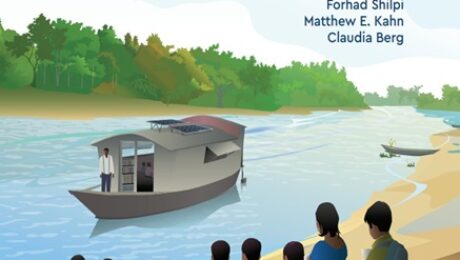
Climate change is accelerating, and harmful weather events—such as extreme storms, droughts, heat waves, or wildfires—are becoming more frequent and severe. Lower-income countries suffer more deaths and lasting losses from disasters than richer countries. Climate shocks push vulnerable households into poverty and cause small businesses to fail, reversing development gains.
“Rethinking Resilience” urges developing countries to adopt policies that empower individuals, households, farms, and firms to take proactive measures. Current approaches rely too heavily on government programs and investments, such as subsidies and cash transfers, which are reactive rather than preventive. Developing economies lack the resources of high-income countries, making them more vulnerable.
- Published in CLIMATE CHANGE, NEW PUBLICATIONS
Dietary diversity and its associated factors among rural labourers in South India
Malnutrition continues to be a major global health challenge affecting millions of vulnerable populations across countries. Despite their critical contribution to agricultural productivity, limited evidence exists regarding the dietary diversity and nutritional status of rural labourers in South India. Therefore, the present study aimed to assess dietary diversity and its associated factors among rural labourers in South India.
- Published in NUTRITION
Operational guide on agroecology
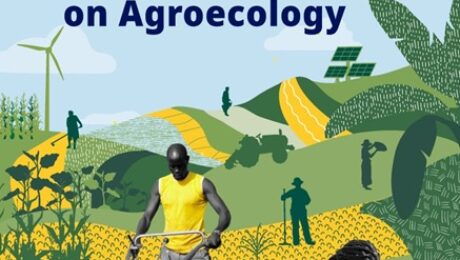
Agroecology is a polysemic concept whose contours have evolved over almost a century. There is not a single definition but a large number that reflect the concerns and commitments of the different authors and practitioners. Thus, the scientific and technical perspective adopted by the High Level Panel of Experts (HLPE) in 2016 when it described agroecology as ‘the application of ecological concepts and principles to agricultural systems, focusing on the interactions between plants, animals, humans and the environment, to foster sustainable agricultural development in order to ensure food and nutrition security for all today and tomorrow’ has become too restrictive. Indeed, the concept has become more complex as it addresses agri-food systems as a whole, and not just agricultural systems, by overcoming the divide between the scientific and technical dimensions of agroecology and its social and political dimensions, and by adopting a holistic perspective. The resulting concept of agroecology, which is widely shared today, is that of a transdisciplinary, participatory and action-oriented approach, relating at the same time to a transdisciplinary science, a set of practices and a social movement.
- Published in AGROECOLOGY
From Digital Divide to Opportunity
As the digital revolution proceeds, it becomes critical to understand the impacts on productivity and income, but also impacts on smallholders across a spectrum of sociodemographic groups, and unintended environmental externalities. The digital transformation of agriculture is multi-faceted. Concentrating on just one or a few aspects is insufficient. Challenges include infrastructure access (electricity, mobile, or internet connectivity), affordability (ability to pay for digital tools and services), awareness, skills and literacy (Roberts and Hernandez 2019). Certain groups—such as women, rural youth, the poor, and people with disabilities or limited formal education—face greater barriers to digitalization (Staab et al. 2024).
Without the understanding to transform inequalities, digitalization could deepen gender inequalities and even create new forms of discrimination (Staab et al. 2024; Sterling 2021). Some fear that digitalization might even make for a new form of gender inequality (Judy Wajcman et al., 2020). As the CGIAR institutionalizes digital innovations to drive transformative changes in FLWs, it is crucial to understand and address gender inequality and social exclusion, so that digital innovations can catalyze greater social inclusion.
- Published in ICTs
Financial Inclusion in Food, Land and Water Systems: What Works for Women?
This brief draws on distilled evidence from research and practice from CGIAR and beyond to highlight how to design financial products, approaches and processes to reach, benefit and empower women through financial inclusion.
Women across Low- and Middle-Income Countries (LMICs) contribute to food, land and water systems (FLWS) as agricultural producers, entrepreneurs, consumers, and conservationists. They produce 60 to 80 percent of the food in most developing countries, are responsible for half of the world’s food production but remain disproportionately excluded from financial services. 742 million rural women who are also least educated, among the poorest and have low or no access to mobile phones are left out of formal financial services, globally. This exclusion discounts their essential roles in the sector, stymies their potential, and hinders their well-being and that of their households and communities. Barriers to women’s financial inclusion include lack of collateral, cumbersome documentation and procedural requirements, legal discrimination, financial illiteracy, discriminatory social norms, financial risk aversion and lack of gender disaggregated data. Financial service providers generally view rural women as risky or unprofitable, moreover, financial services are poorly adapted for low-literacy, low-income women.
- Published in GENDER, NEW PUBLICATIONS