
Farmers’ Characteristics and Constraints in T-aman Rice Cultivation in Bangladesh
Transplanted Aman (T-aman) rice remains integral to household food access and livelihood resilience in northern Bangladesh, yet its production remains constrained by multiple agronomic and socio-economic challenges. This study examined the intensity of constraints encountered by producers involved in T-aman rice production and analysed their relationships with selected farmer attributes. Information was gathered from randomly selected farmers using a pretested structured interview schedule during October 2012. Farmers’ problem confrontation was assessed using a four-point scale across 15 identified constraints, and a PCI was done to classify problem severity. Pearson’s Coefficient was applied to observe linkages between problem confrontation and farmers’ socio-economic and communication characteristics. Results showed that 72.8% of farmers experienced a medium level of problems, while 27.2% faced a high level of problems in T-aman cultivation. High production cost ranked as the most severe constraint. The rest have negative or no significant association. The findings highlight the importance of strengthening farmer knowledge, extension services, and input quality regulation to reduce production constraints and enhance the sustainability of T-aman rice cultivation in vulnerable regions of Bangladesh.
- Published in BANGLADESH, NEW PUBLICATIONS
Guide to monitoring, evaluation and learning toolkits for grassroots agricultural extension and advisory service systems

The monitoring, evaluation and learning (MEL) system is critical to strengthen field-level agricultural extension and advisory services (EAS) systems and thereby support smallholder farmers’ access to agricultural innovations. However, most national EAS systems often lack efficient MEL tools and capacities to plan and conduct systemic MEL. This constrains smallholder farmers from accessing and uptaking agricultural innovation, technology and services. This knowledge product aims to provide a holistic self-MEL approach to strengthening the agricultural EAS system’s role in supporting the agricultural innovation system at the grassroots level. Therefore, it provides MEL indicator frameworks, tools for data collection and analyses, and guidelines on using the self-MEL toolkits for field-level EAS managers and agents. This guide will improve smallholder farmers’ access and uptake of EAS and contribute to the upscaling of EAS, thereby promoting inclusive innovation-driven agricultural development. Its effective application will strengthen science- and evidence-based decision-making through a systemic MEL of the field-level EAS system.
- Published in MONITORING & EVALUATION, NEW PUBLICATIONS
From Risk to Resilience: Helping People and Firms Adapt in South Asia

South Asia is the most climate-vulnerable region among emerging market and developing economies. With governments having limited room to act due to fiscal constraints, the burden of climate adaptation will fall primarily on households and firms. Awareness of climate risks is high; more than three-quarters of households and firms expect a weather shock in the next 10 years. Climate adaptation is widespread, with 63 percent of firms and 80 percent of households having taken action. However, most rely on basic, low-cost solutions rather than leveraging advanced technologies and public infrastructure. Market imperfections and income constraints limit access to information, finance, and technologies needed for more effective adaptation. If these obstacles were removed, private sector adaptation could offset about one-third of the potential damage from rising global temperatures on South Asian economies. The policy priority for governments is therefore to facilitate private sector adaptation through a comprehensive policy package. The package includes climate-specific measures such as improving weather information access, promoting resilient technologies and weather insurance, and investing in protective infrastructure in a targeted manner. Equally important are broader developmental initiatives with resilience co-benefits: in other words, policies that generate double dividends. These include strengthening core public goods like transportation, water systems, and healthcare; addressing barriers to accessing markets, inputs, and finance without causing unintended responses that increase vulnerabilities; and supporting vulnerable groups through shock-responsive social protection.
- Published in CLIMATE CHANGE, NEW PUBLICATIONS
Rethinking Resilience: Adapting to a Changing Climate

Climate change is accelerating, and harmful weather events—such as extreme storms, droughts, heat waves, or wildfires—are becoming more frequent and severe. Lower-income countries suffer more deaths and lasting losses from disasters than richer countries. Climate shocks push vulnerable households into poverty and cause small businesses to fail, reversing development gains.
“Rethinking Resilience” urges developing countries to adopt policies that empower individuals, households, farms, and firms to take proactive measures. Current approaches rely too heavily on government programs and investments, such as subsidies and cash transfers, which are reactive rather than preventive. Developing economies lack the resources of high-income countries, making them more vulnerable.
- Published in CLIMATE CHANGE, NEW PUBLICATIONS
Financial Inclusion in Food, Land and Water Systems: What Works for Women?
This brief draws on distilled evidence from research and practice from CGIAR and beyond to highlight how to design financial products, approaches and processes to reach, benefit and empower women through financial inclusion.
Women across Low- and Middle-Income Countries (LMICs) contribute to food, land and water systems (FLWS) as agricultural producers, entrepreneurs, consumers, and conservationists. They produce 60 to 80 percent of the food in most developing countries, are responsible for half of the world’s food production but remain disproportionately excluded from financial services. 742 million rural women who are also least educated, among the poorest and have low or no access to mobile phones are left out of formal financial services, globally. This exclusion discounts their essential roles in the sector, stymies their potential, and hinders their well-being and that of their households and communities. Barriers to women’s financial inclusion include lack of collateral, cumbersome documentation and procedural requirements, legal discrimination, financial illiteracy, discriminatory social norms, financial risk aversion and lack of gender disaggregated data. Financial service providers generally view rural women as risky or unprofitable, moreover, financial services are poorly adapted for low-literacy, low-income women.
- Published in GENDER, NEW PUBLICATIONS
Investigating the roles and challenges of female extension workers: a systematic review

As the demographics of farming communities change and innovations evolve, the role of female extension workers becomes more critical, especially in reaching out to women farmers who are often primary agricultural laborers in rural households and supporting them to adopt new practices and technologies. This study investigates how the roles and challenges of female extension workers are represented in the literature and what assumptions and implications underpin these representations.
- Published in GENDER, NEW PUBLICATIONS
Smart Agricultural Technology
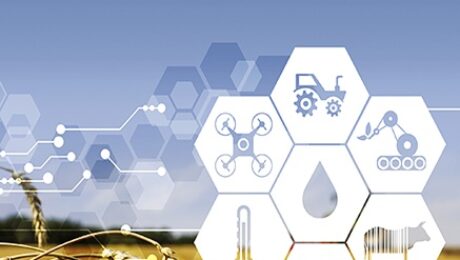
Agriculture is undergoing a rapid digital transformation that challenges its ecological, social, and ethical foundations. A total of 136 documents were analysed through bibliometric and thematic synthesis. Results show that A5.0 represents a philosophical and structural evolution beyond the efficiency-oriented logic of A4.0, integrating distributed computing, explainable artificial intelligence, digital twins, and collaborative robotics within ecologically restorative and socially inclusive frameworks. However, while A5.0 strengthens resource efficiency, resilience, and certain social segments through open-source technologies and participatory design, gaps remain in policy coherence, emotional engagement, and human–machine co-learning. To address these, the study proposes two complementary agroecological principles, cognitive symbiosis and emotional ecology, emphasising shared intelligence and affective stewardship between humans, machines, and ecosystems. Overall, Agriculture 5.0 reframes digitalisation as a human-ecological partnership that can operationalise agroecology’s ethical goals if governed by inclusion, transparency, and regeneration rather than control and optimisation.
- Published in AGROECOLOGY, NEW PUBLICATIONS
Farmers’ willingness to pay for a digital extension tool in Sri Lanka
List experiments utilize indirect survey questions to reduce social desirability bias in measures of sensitive behaviours and sentiments. While often used to assess retrospective behaviour or opinions of respondents, list experiments have not been widely applied to assessing “deep” parameters of economic models, such as willingness to pay. Common stated preference methods of estimating willingness to pay may be impacted by social desirability bias, particularly when a product has been provided to survey recipients for free. List experiments can uncover the share of respondents willing to pay a given price while reducing social desirability bias. Repeating the method at a variety of prices recovers a partial demand curve. This study discusses the conditions required to satisfy the list experiment validity assumptions and demonstrates the method in an e-extension platform randomized control trial in Sri Lanka. We show that the “no design effect” assumption for list experiments requires that the budget constraint for a household be non-binding. Under conditions where that assumption is likely to hold, we find direct estimates overstate willingness to pay at low prices. Our findings suggest list experiments may provide a cheap method of more accurately assessing the typically large share of respondents unwilling to pay any non-zero-sum (extensive margin) but are less effective at reducing bias from exaggerated demand (intensive margin).
- Published in NEW PUBLICATIONS, SRI LANKA
Rural transformation through agribusiness incubation-The evolving Asian experience
Agribusiness incubation (ABI) has emerged as a transformative strategy for revitalizing rural livelihoods, engaging youth in agriculture, and promoting sustainable technologies. This publication examines the pivotal role of ABIs in reshaping the agrifood system by providing essential support services and fostering collaboration among smallholder farmers and emerging entrepreneurs. As countries in the Asia Pacific implement diverse ABI models, the successful experiences from the Republic of Korea, India, the Philippines, and Viet Nam offer valuable lessons for addressing rural poverty, attracting youth, and mitigating climate change challenges.
- Published in NEW PUBLICATIONS
Future of Pulses and Legumes Seed Systems in India
This policy brief is a collaborative outcome of the Policy Dialogue jointly hosted by the International Crops Research Institute for the Semi-Arid Tropics (ICRISAT) and the Centre for Research on Innovation and Science Policy (CRISP) in November 2024. The dialogue brought together key stakeholders to deliberate on enhancing seed systems for dryland crops in India. The brief presents actionable recommendations to align seed policy with the evolving needs of farmers, researchers, and the private sector. It underscores the importance of supportive regulatory frameworks, increased public-private collaboration, and the role of innovation in improving access to quality seeds for climate-resilient agriculture.
- Published in NEW PUBLICATIONS
- 1
- 2