
Promoting the Development of Livestock Value Chains in Bangladesh to Reduce Poverty
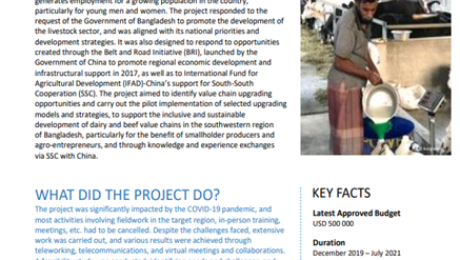
Bangladesh is a low income economy. The livestock sector is not only a source of income and nutritious food for rural households, it also generates employment for a growing population in the country, particularly for young men and women. The project responded to the request of the Government of Bangladesh to promote the development of the livestock sector, and was aligned with its national priorities and development strategies. It was also designed to respond to opportunities created through the Belt and Road Initiative (BRI), launched by the Government of China to promote regional economic development and infrastructural support in 2017, as well as to International Fund for Agricultural Development (IFAD) China’s support for South South Cooperation (SSC). The project aimed to identify value chain upgrading opportunities and carry out the pilot implementation of selected upgrading models and strategies, to support the inclusive and sustainable development of dairy and beef value chains in the southwestern region of Bangladesh, particularly for the benefit of smallholder producers and agro entrepreneurs, and through knowledge and experience exchanges via SSC with China.
- Published in BANGLADESH, NUTRITION, RESOURCES
Securing food for all in Bangladesh
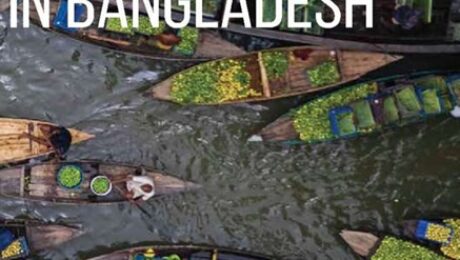
Access to sufficient food by all people at all times to meet their dietary needs is a matter of critical importance. Despite declining arable agricultural land, Bangladesh has made commendable progress in boosting domestic food production. The growth in overall food production has been keeping ahead of population growth, resulting in higher per capita availability of food over time. In the early 1970s, Bangladesh was a food-deficit country with a population of about 75 million. Today, the population is 165 million, and the country is now self-sufficient in rice production, which has tripled over the past three decades. Along with enhanced food production, increased income has improved people’s access to food. Furthermore, nutritional outcomes have improved significantly.
Nevertheless, the challenges to food and nutrition security remain formidable. Future agricultural growth and food and nutrition security are threatened by population growth, worsening soil fertility, diminishing access to land and other scarce natural resources, increasing vulnerability of crop varieties to pests and diseases, and persistent poverty leading to poor access to food. In addition, the impacts of climate change—an increase in the incidence of natural disasters, sea intrusion, and salinity—will exacerbate food and nutrition insecurity in the coming decades if corrective measures are not taken. Aligned with this context, the authors of the book explore policy options and strategies for developing agriculture and improving food security in Bangladesh. Securing Food for All in Bangladesh, with its breadth and scope, will be an invaluable resource for policymakers, researchers, and students dedicated to improving people’s livelihoods in Bangladesh.
- Published in BANGLADESH, NUTRITION, RESOURCES
New land, new life: a success story of new land resettlement in Bangladesh.
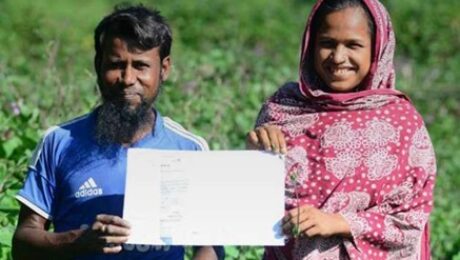
The Ganges-Brahmaputra-Meghna deltas has newly emerged ‘char’ islands, which are very vulnerable, socially, institutionally and environmentally. This book explains how the governments of Bangladesh and the Netherlands cooperated on a land-based rural development project to give settlers security and purpose. The 13 chapters in this book are based on experience gathered from implementing the Char Development and Settlement Project undertaken since 1994.
- Published in BANGLADESH
ACIAR–Bangladesh Collaboration Strategy 2021–2030
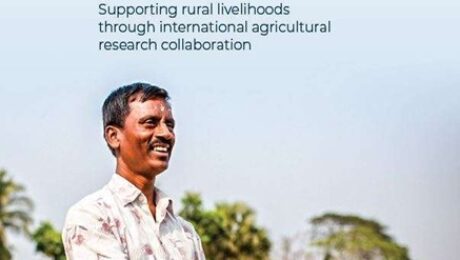
A 10-year strategy enables the possibility of longer-term and flexible programs that respond to the complex challenges of issues (such as climate change) and enables a recalibration of the relationship that can affirm the changing nature of the partnerships and the role ACIAR plays in catalysing regional collaboration. This strategy acknowledges how the relationship between ACIAR and Bangladesh has evolved to become a strong co-invested partnership, and affirms the importance of the contribution of ACIAR to regional collaboration.
- Published in BANGLADESH, PRIVATE SECTOR EXTENSION /PPP, RESOURCES
Women’s empowerment and farmland allocations in Bangladesh: evidence of a possible pathway to crop diversification
Climate change will likely affect several of the dimensions that determine people’s food security status in Bangladesh, from crop production to the availability and accessibility of food products. Crop diversification is a form of adaptation to climate change that reduces exposure to climate-related risks and has also been shown to increase diet diversity, reduce micronutrient deficiencies, and positively affect agro-ecological systems. Despite these benefits, the level of crop diversification in Bangladesh remains extremely low, requiring an examination of the factors that support uptake of this practice. This paper explores whether women’s empowerment, measured using the Women’s Empowerment in Agriculture Index (WEAI), leads to increased diversification in the use of farmland. Our results reveal that some aspects of women’s empowerment in agriculture, but not all, lead to more diversification and to a transition from cereal production to other crops like vegetables and fruits. These findings suggest a possible pathway for gender-sensitive interventions that promote crop diversity as a risk management tool and as a way to improve the availability of nutritious crops.
- Published in BANGLADESH, GENDER, RESOURCES
Development of balanced nutrient management innovations in South Asia: Perspectives from Bangladesh, India, Nepal, and Sri Lanka

Imbalanced application of fertilizers is a major fiscal and environmental problem in South Asia. We review fertilizer policies and extension efforts to promote the balanced application of nutrients in Bangladesh, India, Nepal, and Sri Lanka and draw 4 important lessons. (1) Fertilizer sector reforms need to be fiscally sustainable and politically feasible. Governments in South Asia have abolished fertilizer subsidies on multiple occasions, only to restore them a few years later. (2) The use of phosphate and potash did not decline much even after a sharp increase in their prices in India in 2011–12. Therefore, rationalizing subsidies, while necessary, may not be sufficient to ensure balanced use of fertilizers. Changing farmers’ practice requires combining the right incentives with the right information. (3) Soil test based soil health cards (SHC) hold promise, but there is limited evidence on their utility. India’s SHC program had very little impact on fertilizer use. (4) Direct cash transfer (DCT) of fertilizer subsidies can reduce distortions, but Sri Lanka’s experience shows that implementing it is more challenging than universal subsidies. DCT requires the removal of price controls, integration of land records, farmer identity cards, a cash transfer system with universal coverage, and a competitive fertilizer retail sector.
- Published in BANGLADESH, INDIA, NATURAL RESOURCE MANAGEMENT, NEPAL, RESOURCES, SRI LANKA
National catalogue of soybean varieties in Afghanistan
The national variety catalogue is an official document in which all commercialized crop varieties in the country are registered and their major varietal characteristics listed. It is a valuable reference for public- and private-sector plant breeders, seed producers, and crop producers, as well as seed certification agencies, extension services, and plant variety protection offices.
- Published in AFGHANISTAN, NUTRITION, RESOURCES
Nutrition Sensitive Food Systems in Conflict Affected Regions-A Case Study of Afghanistan
The food systems approach can contribute to food security and reduced malnutrition levels by identifying key investments and policies throughout the food system, including production, processing, marketing, and consumption of food. However, in countries facing fragility and conflict, it has proven difficult to implement such an approach and achieve the desired results. This has been the case in Afghanistan, where high levels of malnutrition stem in part from an undersupply of nutritious food. Multi-sectoral approaches to promote nutrition sensitivity and achieve diet-based solutions have also had only limited impact. This paper reports on an analysis of the nutrition sensitivity of food systems in Afghanistan using multi-sector consultations and gap analyses to examine two key food and nutrition policies, the National Comprehensive Agriculture Development Priority Program and the Afghanistan Food Security and Nutrition Agenda. It highlights gaps in the policies and identifies investment priorities to make food systems more nutrition sensitive. The results show that instilling nutrition sensitivity into the operation of Afghanistan’s food systems can only be accomplished if certain key measures are incorporated into the food system. These include addressing the absence of knowledge in the population regarding healthy diets, the lack of sufficient food for vulnerable populations, weak irrigation systems, capacity constraints at individual and institutional levels, data challenges, and weak natural resource management. In addition, the above weaknesses are compounded by the continued violence and conflict-induced insecurity, weak government, and inadequate investments. Given the role of different sectors in contributing to improved nutrition, appropriate and effective multistakeholder coordination and collaboration is paramount to such efforts.
- Published in AFGHANISTAN, NUTRITION, RESOURCES
Investing in rural people in Afghanistan
IFAD works with small-scale farmers and vulnerable and marginalized socio-economic groups, particularly women and ethnic minorities, in rural and mountain environments. IFAD’s current work in Afghanistan takes into account the difficult security situation across most of the country.
Key intervention domains will include climate-smart small-scale production and value chain development, marketing support, and the promotion of both on- and off-farm economic opportunities for poor and vulnerable rural women, men and youth. Measures to address gender inequality will also be specifically considered and promoted.
- Published in AFGHANISTAN
Global Capacity Needs Assessment for Nutrition-Sensitive Agriculture
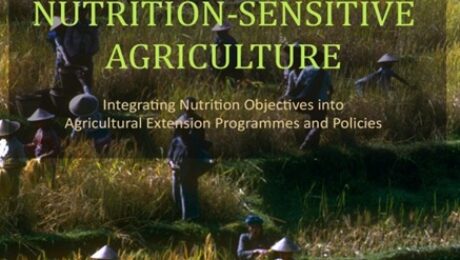
Building the capacities in nutrition of agricultural extension and advisory services (EAS) is widely considered a critical aspect to promote nutrition-sensitive agriculture (NSA) and help achieve household food and nutrition security. Under the auspices of the German-funded ‘Strengthening Capacities for Nutrition Sensitive Agriculture and Food Systems’ project (GCP/INT/714/GER), the Food and Agriculture Organization of the United Nations (FAO) in partnership with the Global Forum for Rural Advisory Services (GFRAS) initiated in 2019 a process to understand the gaps in learning and capacity among EAS providers in integrating nutrition objectives into agricultural extension programmes and policies. This process consisted of the development, the piloting at country level, the validation and dissemination of a Global Capacity Needs Assessment (GCNA) methodology aimed to assist countries in assessing their own capacity gaps in nutrition and EAS. The GCNA methodology was then pilot- tested in five countries in four regions by GFRAS member organizations. These assessments were led by the GFRAS Regional networks and Country Fora and consultants specifically associated with these networks. Country level workshops were carried out by GFRAS regional members to review the outputs of the pilot studies.