
Promotion of agro tourism in rural areas of Galle district in Sri Lanka
The sector remains an economic mainstay and primary national employer. As manufacturing and industrial activities have expanded, agriculture’s position as the primary economic engine has been eroded in recent years, although it remains a major strength, with high-value tea, rubber and coconut and spice production contributing significantly to export earnings. This is despite falling global commodities prices and reduced production hitting export crops in recent years. Favorable weather conditions have afforded agricultural production a considerable amount of diversification in Sri Lanka. Although tea production remains the greatest agricultural strength, accounting for 13% of total exports in 2015, the country is also the world’s leading exporter of cinnamon and coconut fiber, while its abundance of natural rubber allowed rubber export earnings to peak at over $1bn in 2011. The sector also produces high-quality horticultural exports, notably tropical fruits and fresh-cut flowers. Its two largest cereal crops – rice and maize – meet the bulk of domestic demand, but Sri Lanka is not food self-sufficient, and relies on imports of wheat, rice and maize to meet domestic demand Figure 1.1 Evidence from the production and price fluctuations during last three to four decades in both conventional agriculture sector with intensive production of rice, vegetables and other subsistence crops and plantation agriculture sector with intensive production of tea, rubber, coconut, coffee, etc in Sri Lanka shows that they are highly vulnerable to external factors such as internal and international politics, climate change and whether pattern changes, market and trade crumples, etc.
- Published in AGROTOURISM
A typology for defining agritourism
Tourism and the Sustainable Development Goals – Journey to 2030 serves as a guide to how the tourism sector can contribute towards the implementation and achievement of the 17 SDGs. It aims to inspire governments, policymakers and tourism companies to incorporate relevant aspects of the SDGs into policy and financing frameworks as well as business operations and investments. The publication’s recommendations are based on an analysis of 64 countries’ Voluntary National Reviews (VNRs) on the SDGs – submitted to the United Nations High-level Political Forum on Sustainable Development in 2016 and 2017 – as well as eight Mainstreaming, Acceleration and Policy Support (MAPS) country roadmaps and the CSR activities of 60 global tourism companies.
- Published in AGROTOURISM
Tourism and the Sustainable Development Goals –Journey to 2030

Tourism and the Sustainable Development Goals – Journey to 2030 serves as a guide to how the tourism sector can contribute towards the implementation and achievement of the 17 SDGs. It aims to inspire governments, policymakers and tourism companies to incorporate relevant aspects of the SDGs into policy and financing frameworks as well as business operations and investments. The publication’s recommendations are based on an analysis of 64 countries’ Voluntary National Reviews (VNRs) on the SDGs – submitted to the United Nations High-level Political Forum on Sustainable Development in 2016 and 2017 – as well as eight Mainstreaming, Acceleration and Policy Support (MAPS) country roadmaps and the CSR activities of 60 global tourism companies.
- Published in AGROTOURISM
LAOS-Study visit to an agro-tourism farm
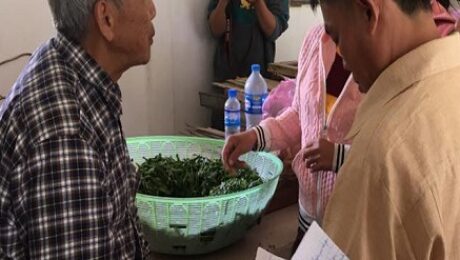
The organic vegetable group in Houyoun village, Xay district, Oudomxay province is a member of the Lao Farmer Network (LFN) since 2016. The group has about 300 members in the village producing organic vegetables since 2015, which they sell to local market in Xay town. Besides growing vegetable, they also produce some grapes.
During the visit of the LFN secretariat in January 2017, the group expressed their interest to learn about processing wine and adding value to their organic vegetable garden. The idea of setting up agro-tourism also came out. However, they don’t have a clear ideas on how to do it or what are steps toward.
Because of these reasons, LFN organized a study visit for 10 Khmou farmers (5 women, 5 youth) from the Houyoun organic vegetable group to visit an agro-tourism site, the Vangvieng organic farm in Vientiane province, on 14-15 February 2017.
- Published in AGROTOURISM
Does Agrotourism Benefit Mountain Farmers? A Case Study in Phu Ruea District, Northeast Thailand
Agrotourism is widely advocated as a useful strategy to develop mountain agriculture and improve farmers’ income and quality of life. However, the relationship between agriculture and tourism is complex, and the extent to which tourism benefits farmers remains uncertain. This paper examines the relationship between agriculture and tourism and assesses to what extent agrotourism benefits farmers in Phu Ruea district, a popular tourist destination in the mountains of northeast Thailand. The Phu Ruea agrotourism system generated gross income for the district of almost US$ 16 million in 2014. About 80% of this income came from sales from specialty-crop farms and of tourism services operated by the households of local farms. The agrotourism system also created many employment opportunities for local people. There were 1500 people directly involved in the system, 90% of whom were farmers or members of farm households. Thus, there is no doubt that many local farmers derive significant benefits from their involvement in the agrotourism system. Although the Phu Ruea agrotourism system can be seen as a successful strategy for developing mountain agriculture, agrotourism is not a magic strategy to solve all the problems of rural development in the mountains. Only some localities are attractive to tourists, and only some farmers have the knowledge, skills, and resources to take advantage of the opportunities offered by tourism.
- Published in AGROTOURISM
Enabling the Business of Agriculture
Enabling the Business of Agriculture 2019 presents indicators that measure the laws, regulations and bureaucratic processes that affect farmers in 101 countries. The study covers eight thematic areas: supplying seed, registering fertilizer, securing water, registering machinery, sustaining livestock, protecting plant health, trading food and accessing finance. It highlights global best performers and countries that made the most significant regulatory improvements in support of farmers.
- Published in AGRIPRENEURSHIP
How to do note: Access to land for rural youth employment and entrepreneurship
This How-to-do Note on access to land for rural youth employment and entrepreneurship complements the Toolkit on land tenure in IFAD-financed operations that highlights the importance of strengthening tenure security for rural development.
It builds on the work done by IFAD to support rural youth employment and entrepreneurship, by highlighting important issues and good practices from around the world on how to address them.
This How-to-do Note is designed for country programme teams, consultants and technical advisors, to provide guidance on designing projects with youth-sensitive interventions targeted at strengthening tenure security to achieve more equitable development.
- Published in AGRIPRENEURSHIP
Agri-Startups and Agribusiness for the Development of Agriculture

Agritech-startups is a versatility tale and a new one. It is about exploiting technologies by the absolute dedication and creating solutions to indigenous issues. The road is less travelled, but it can unravel significant treasures while also pulling the agriculture sector out of the dark. India witnessed deals that are made up for 4.7 percent of the total deals globally and attracted 9.5 percent of the total startup investment amounts raised. Food and beverage, e-commerce, and fintech are three of the exceptionally performing startup sectors in India this year. While seed funding amounts were quite lower than the global average, venture funding amounts were twice the global venture funding figures this year. People are conscious about risk and rewards and India is referred to as a price-sensitive market. Indian markets are largely unorganized and fragmented which creates a roadblock for a startup to succeed. The behavior of Indian consumers changes every 30-50km that makes it really difficult for a startup to create a business or market strategy for their products or services. Most startups generally get stuck in stagnancy and gradually shut down. India is a place of varied culture and taste thus, every product might not be welcomed equally in every region. Appropriate IT-infrastructure has become a need for Indian businesses given the growing number of consumers online. Most startups are self-subsidized with a small workforce, making financial and operating records impossible. Farmers and Agritech startups have evolved rapidly over the past few years due to digital penetration and funding, majorly driving the growth of this sector. Solutions focused on developing a strong supply chain remain a key priority for all stakeholders. B2B is considered to be the biggest revenue-generating stakeholder due to long term business sustainability. Outlook in 2020 should be towards driving innovation, data collaboration, easy working capital and providing digital infrastructure.
- Published in AGRIPRENEURSHIP
Catalysing young agri-entrepreneurs’ investments and ensuring their sustainability – Strategic planning tool

The achievement of the first two Sustainable Development Goals (SDGs) – end poverty and hunger by 2030 – requires substantial investments. To fully contribute to sustainable development, both public and private investments should be perfectly aligned with the SDGs. In this context, empowering youth to invest in their own farms and businesses along agricultural value chains should be a key component of sustainable development-centered investment promotion and mobilization strategy for three reasons: the improvement of food security; the promotion of the added value of food products; and the improvement of employment and economic well-being.
This strategic planning tool can help propel investments by young agri-entrepreneurs at national or regional levels, and help ensure their sustainability. It analyses the current environment and overall conditions young investors face while offering practical solutions to overcome the main challenges identified. The strategic planning tool also helps ensure that decision-makers take ownership of the results through a participatory and inclusive process.
- Published in AGRIPRENEURSHIP
Agricultural Extension and Advisory Services: Serving Farming Community by Agripreneurship Amid COVID-19

The COVID-19 outbreak has generated extreme vulnerability in the agriculture sector by creating a future threat to food security. The Agricultural Extension and Advisory Service (EAS) systems have been playing a crucial role at the frontline of the response to the COVID-19 pandemic in rural areas. This is not the first time that EAS has been called to intervene in an emerging catastrophe. As an institution with trained technical staff, the extension has supported efforts and educated communities during natural disasters. Agripreneurs trained under the AC & ABC scheme have changed their way of operating in order to adapt to the government regulations. Efforts by MANAGE and partners have resulted in the training of 72,806 agri-graduates and the establishment of 30,583 (42%) active agriventures across the world as of 2 December 2020. Although the pandemic has affected the agripreneurs’ business in terms of getting recommended inputs, reduced sale of inputs and monthly turnover, their extension services have remained significant.
- Published in AGRIPRENEURSHIP