Compendium of Climate-Resilient Agriculture Technologies and Approaches in the Philippines
This Compendium of Climate-Resilient Agriculture Technologies and Approaches in the Philippines has been produced in response to the need to provide science-based and actionable knowledge on climate-resilient agricultural technologies and practices in different agroecological systems in the Philippines. The compendium aims to better guide policymakers, farmer organizations, researchers, extension workers, and the agribusiness sector, as well as climate-smart agriculture practitioners. It does not only present a menu of solutions but more importantly, it proposes that a business-as-usual attitude is no longer an option if we want to protect the future of our food supply and the well-being of the farmers and communities that produce it.
- Published in CLIMATE CHANGE
YOUTH IN MOTION FOR CLIMATE ACTION: A compilation of youth initiatives in agriculture to address the impacts of climate change
A compilation of youth initiatives in agriculture to address the impacts of climate change
This publication is a compilation of ten successful youth-focused or youth-led initiatives in agriculture that address the impacts of climate change. The highlighted initiatives can serve as a promotional tool for youth networks, practitioners and programme managers who are interested in supporting youth in the agriculture sectors under a changing climate. The case studies are organized under five themes: E-agriculture, innovation and technology; youth employment; capacity development; entrepreneurship; and Alliances and Networks.
- Published in CLIMATE CHANGE
Strengthening Capacity for Enhanced Animal Nutrition Services
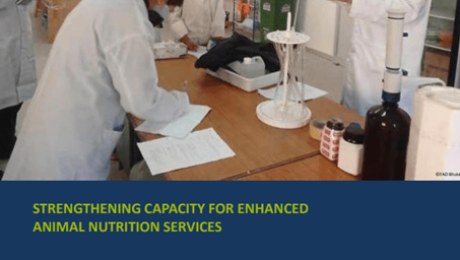
Bhutanese farmers practise mixed farming, with crops and livestock rearing forming an integral part of their livelihoods, particularly in rural communities At farmers’ level, agriculture, livestock and forest interventions are integrated farmers depend on livestock for manure for soil fertility, and dairy products for nutrition and income, while forests provide feed and fodder for animals, timber for construction, wood for heating and cooking, and non wood forest products for consumption and sale Communities in higher altitudes depend more on livestock as the farming of crops has limited scope In semi urban areas, commercial dairy and other livestock products have also emerged with improved breeds Animal nutrition has thus become more important than ever before The only animal nutrition laboratory ( equipped to analyse feed and fodder samples in the country is in Jakar in north central Bhutan However, the laboratory lacks capacity in terms of both institutional and human resources Owing to insufficient government funding, the ANL is not fully functional and, despite the important national mandate of the laboratory, the government has not been able to equip it adequately, nor train personnel to carry out important feed analysis functions Some of the existing equipment is obsolete and not serviceable, while laboratory staff members have not received adequate training in the use of the laboratory facilities The ANL needs equipment for the analysis of feed and fodder samples Training and refresher courses are also required to ensure that laboratory staff members are kept abreast of the latest developments in livestock nutrition.
- Published in CAPACITY DEVELOPMENT, LIVESTOCK / FISHERIES
Digital agriculture in action-Selected case studies from India
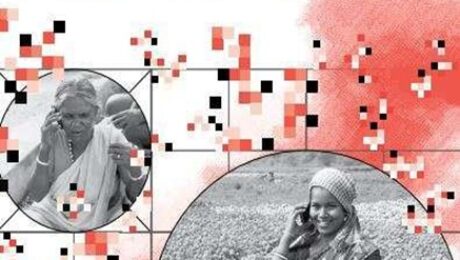
Agriculture is becoming more knowledge-intensive. Access to timely, accurate information tailored to specific locations and conditions is critical to helping farmers make the most of their resources in changing circumstances. Digital technologies help overcome these challenges by bridging the information gap, improving access to market information, enhancing access to micro-finance, providing actionable advisories on managing pest and disease as well as improving agriculture human capital. However, sustaining digital interventions needs a holistic approach that includes the right policies, frameworks, ecosystem and capacities. This publication highlights some successful initiatives in leveraging digital technologies, improving value-chain processes and building capacity to bring about positive change among agriculture stakeholders and improve livelihoods. This publication is part of the Country Investment Highlights series under the FAO Investment Centre’s Knowledge for Investment (K4I) programme.
- Published in ICTs
Half of Afghanistan’s population faces acute hunger as humanitarian needs grow to record levels
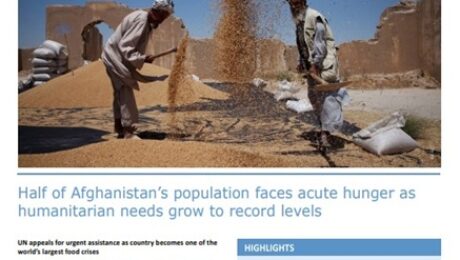
This newsletter compiles the human-interest stories and news releases published in the 4th quarter of 2021 by the FAO Representation in Afghanistan. They include both development and humanitarian work and depict the impact and relevance of FAO’s work in the lives of those farmers, livestock owners, herders and other vulnerable rural people assisted by FAO in Afghanistan.
- Published in AFGHANISTAN
Capacity building towards agricultural sustainability in the Maldives
A recent study undertaken in the Maldives investigated agricultural stakeholders’ views on capacity building towards sustainable agriculture. In this study, the views of 373 stakeholders were analysed and coded. Ten codes emerged from the data analysis, two of which are the subject for discussion in this paper. The first of the two codes examined stakeholders’ understanding of the term ‘sustainable agriculture’ and, the second code examined understanding of the term ‘building capacity in agriculture’. The two codes revealed a converging view amongst farmers that agricultural sustainability was inextricably linked to profitability. This was underpinned by increased production capacity fuelled by enhanced access to inputs and markets. Farmers further noted that the best vehicle through which capacity building towards profitability could be achieved was that of individualistic farming activity, either as sole farmers or family farming units. Conversely, the study noted that institutional agricultural capacity building interventions had a softer focus on profitability. Such interventions generally concentrated on improving islanders’ livelihoods and building food security through the establishment of collective producer and marketing cooperatives. This paper examines why intervention slippages occurred and suggests their recalibration in favour of assisting individualistic farming units in building capacity towards profitability and agricultural sustainability.
- Published in CAPACITY DEVELOPMENT
Global capacity needs assessment (GCNA) methodology
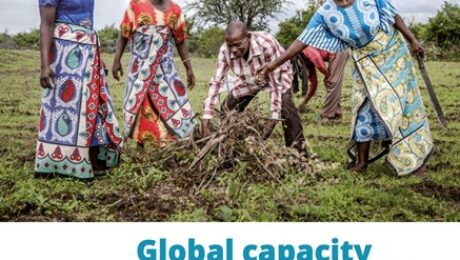
This methodology aims to support countries to:
explore opportunities and challenges to integrate nutrition-related objectives into agricultural programmes and policies; identify capacity needs of the EAS providers and at the organizational and policy/enabling environment levels for strengthening capacities to integrate nutrition outcomes in their regular tasks and responsibilities; and identify knowledge gaps in training materials on nutrition-sensitive agriculture.
- Published in CAPACITY DEVELOPMENT, NUTRITION
Training Module on Facilitation for Development
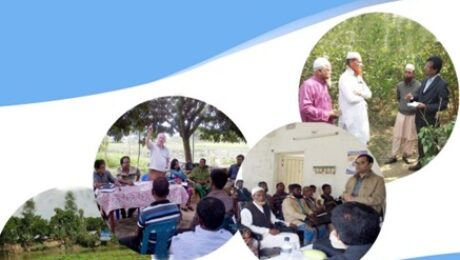
Development is the process of change and facilitation helps in accelerating this process through the change agents‘ or the extension service provider. While working with farmers, agri-traders and processors, facilitation refers to promote group learning, building consensus and enhancing participation in collective actions. A facilitator has multidimensional roles to play.
The module has been prepared to assist facilitators/ trainers engaged in training of agricultural extension and advisory services (EAS) staff and other mediators on facilitation for development by enhancing their knowledge on how to facilitate change in individuals, groups and organizations and also to facilitate multi-stakeholder engagements through brokering strategic partnerships and networking. While working through this module the trainers will find the relevance of facilitation for development in the context of agricultural innovation services (AIS).
- Published in GUIDE/TOOLS/MANUALS
Developing Capacities For Agricultural Innovation Systems
The CDAIS project was designed to strengthen TAP through the development of a common framework for Capacity Development for Agricultural Innovation Systems (CD for AIS) which sets concepts and guidance for the promotion of agricultural innovation system (AIS) thinking and collaborative learning, and for the strengthening of capacities for AIS in tropical countries. The project tested this common framework (or so-called ‘TAP CF’) in eight pilot countries,1 offering a variety of situations across three continents. A transversal analysis of the project outcomes therefore intended to ‘validate’ the common framework, meaning to verify hypotheses underpinning the TAP CF and to verify how changes happened in the eight countries in relation with the mode of operationalization of the TAP CF by the CDAIS project. In other words, the transversal analysis sought to understand how the project produced outcomes, what these outcomes were in each country, so as to propose recommendations for upgrading the TAP Common Framework across its theoretical and practical dimensions.
- Published in CAPACITY DEVELOPMENT
Creating Opportunities for Rural Youth: 2019 Rural Development Report- IFAD

Enabling young rural women and men to become productive, connected and in charge of their own future requires thinking differently about the diverse settings in which they seek to thrive, the multiple constraints they face and the dynamics of change in the world that create challenges and opportunities for them.
- Published in YOUTH