
Food-system interventions with climate change and nutrition co-benefits: a literature review
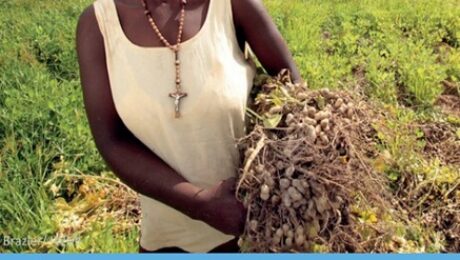
This literature review report explores the conceptual linkages between climate change and nutrition using a food system approach.
The report also reflects on the current body of information derived from projects promoting climate change mitigation and adaptation, with nutrition co-benefits and vice versa. The recommendations in this report can inform future design and implementation of projects that seek to achieve both climate change mitigation and adaptation objectives as well as improved nutrition.
- Published in CLIMATE CHANGE, NUTRITION
A Changing Climate for Knowledge Generation in Agriculture: Lessons to Institutionalize Science-Policy Engagement

Effective science-policy engagement efforts are crucial to accelerate climate action. Such efforts should be underpinned by high-quality knowledge generation that enhances salience, credibility and legitimacy of research results. This is particularly important for the agricultural sector. Agriculture has been identified as a priority for climate action. The sector also constitutes well-established institutions set up to help achieve food and nutrition security. Institutionalizing high quality knowledge generation for climate change adaptation within these institutions presents a major opportunity to catalyze climate action within the sector. To contribute to insights about this institutionalization, we draw on and develop Cash et al.’s 2002 success conditions for enhancing salience, credibility and legitimacy: (1) increased accountability, (2) use of boundary objects, (3) participation across the boundary, (4) mediation and a selectively permeable boundary, (5) translation, and (6) coordination and complementary expertise. We examine how these success conditions apply in a major global case of agricultural research for development under climate change: the CGIAR Research Program on Climate Change, Agriculture and Food Security (CCAFS). We explore these success conditions in the wider context of CGIAR reform and response to climate change as the international system for Agricultural Research for Development (AR4D). Our results specify and confirm the practical relevance of the six success conditions for institutional design and reform, but also point to the need to complement these with two inductively-derived success conditions: effective leadership and presence of incentives. To institutionalize these success conditions among AR4D institutions, there is an urgent need to create a conducive environment that enables the development of context-specific science-policy engagement strategies, along with leadership development and efforts to break traditional disciplinary silos which constrain user-oriented knowledge production.
- Published in CLIMATE CHANGE
Climate change vulnerability and adaptation strategies for smallholder farmers in Yangi Qala District, Takhar, Afghanistan
Modelling of climate change scenarios for Pakistan indicates that if agriculture and water management in the Indus River Basin continue in a ‘business as usual’ mode, the increase in temperatures and changes in precipitation will pose serious threats to the future livelihoods of farmers and to the Pakistani agricultural sector. In this context, FAO Pakistan has proposed a project to the Green Climate Fund (GCF) on “Transforming the Indus Basin with Climate Resilient Agriculture and Water Management”. This project is designed to change that by moving away from ‘business as usual’ in the Basin and shifting agriculture and water management to a new paradigm in which producers are successfully adapting to climate change and are able to sustain their livelihoods. The project objective is to transform agriculture in the Basin by increasing resilience among the most vulnerable farmers and strengthening the Government’s capacity to support their communities to adapt. To ensure the success of the project, an appropriate selection of districts for project interventions is a crucial factor. The Technical team at FAO has employed a detailed Multiple Criteria Decision Analysis (MCDA) technique using GIS for the selection of the district areas. As an outcome of the detailed MCDA analysis, a GIS based vulnerability index has been developed for the districts. Based on the vulnerability index, eight districts in Punjab and Sindh are selected for the implementation of the project.
- Published in AFGHANISTAN, CLIMATE CHANGE
Multi-criteria decision analysis for selection of vulnerable districts
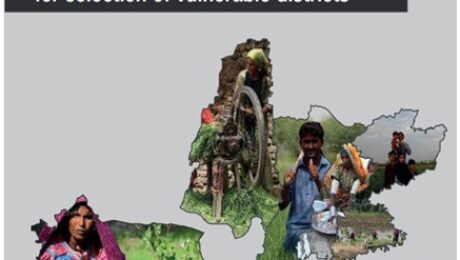
Modelling of climate change scenarios for Pakistan indicates that if agriculture and water management in the Indus River Basin continue in a ‘business as usual’ mode, the increase in temperatures and changes in precipitation will pose serious threats to the future livelihoods of farmers and to the Pakistani agricultural sector. In this context, FAO Pakistan has proposed a project to the Green Climate Fund (GCF) on “Transforming the Indus Basin with Climate Resilient Agriculture and Water Management”. This project is designed to change that by moving away from ‘business as usual’ in the Basin and shifting agriculture and water management to a new paradigm in which producers are successfully adapting to climate change and are able to sustain their livelihoods. The project objective is to transform agriculture in the Basin by increasing resilience among the most vulnerable farmers and strengthening the Government’s capacity to support their communities to adapt. To ensure the success of the project, an appropriate selection of districts for project interventions is a crucial factor. The Technical team at FAO has employed a detailed Multiple Criteria Decision Analysis (MCDA) technique using GIS for the selection of the district areas. As an outcome of the detailed MCDA analysis, a GIS based vulnerability index has been developed for the districts. Based on the vulnerability index, eight districts in Punjab and Sindh are selected for the implementation of the project.
- Published in CLIMATE CHANGE, NATURAL RESOURCE MANAGEMENT, PAKISTAN
Climate risk management – a framework
The purpose of this paper is to serve as an informational document that captures the
GP L&D’s understanding and state of the art regarding the topic of Climate Risk
Management (in this document referred to as CRM) in the context of the global
programme’s work. This concept paper is a supplement to the much shorter infosheet
with the same title and provides in-depth information on the GP L&D’s understanding
and operationalisation of CRM. The document is to inform GIZ colleagues so as to
support the knowledge management and sustainability of the programme. It shall be
used as a basis for common understanding, discussion, and further development of the
CRM concepts, guidelines, and instruments developed by the GP L&D – in particular
the CRM framework.
- Published in CLIMATE CHANGE
The impact of disasters and crises on agriculture and food security: 2021
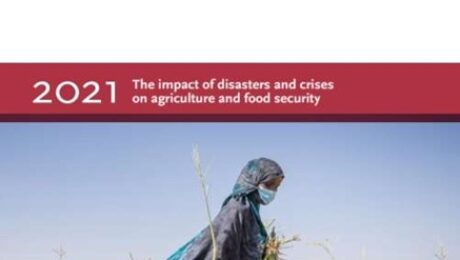
On top of a decade of exacerbated disaster loss, exceptional global heat, retreating ice and rising sea levels, humanity and our food security face a range of new and unprecedented hazards, such as megafires, extreme weather events, desert locust swarms of magnitudes previously unseen, and the COVID-19 pandemic. Agriculture underpins the livelihoods of over 2.5 billion people – most of them in low-income developing countries – and remains a key driver of development. At no other point in history has agriculture been faced with such an array of familiar and unfamiliar risks, interacting in a hyperconnected world and a precipitously changing landscape. And agriculture continues to absorb a disproportionate share of the damage and loss wrought by disasters. Their growing frequency and intensity, along with the systemic nature of risk, are upending people’s lives, devastating livelihoods, and jeopardizing our entire food system. This report makes a powerful case for investing in resilience and disaster risk reduction – especially data gathering and analysis for evidence informed action – to ensure agriculture’s crucial role in achieving the future we want.
- Published in CLIMATE CHANGE
Transforming Recovery into a Green Future

This statement, prepared by the Task Force on Green Recovery of the Lancet COVID-19 Commission provides some initial reflections on key priorities to support a green, fair and resilient recovery from COVID-19.
The COVID-19 pandemic is a serious setback for sustainable development, but United Nations (UN) Member States should not scale back their ambition. The COVID-19 pandemic has caused the worst economic contraction since the Great Depression.1 The Agenda 2030, the Sustainable Development Goals (SDGs) and the Paris Climate Agreement (Paris Agreement) provide the longterm vision and remain “The Future we Want.”2,3 They provide a roadmap for sustainable, inclusive, and resilient recovery. Beyond fiscal expansion that boost aggregate demand, this crisis calls for transformative public investments that shape a sustainable, fair, and digital transition, and leverage private sector investment.
- Published in CLIMATE CHANGE
The challenge of making climate adaptation profitable for farmers – Evidence from Sri Lanka’s rice sector
Increased incidences of drought and water scarcity due to climate change is an important challenge facing Sri Lanka’s agricultural sector. Identifying farm practices that can reduce its adverse impacts on agricultural production and farmers’ livelihoods is a key policy objective in Sri Lanka. This paper makes use of household survey data collected in Anurādhapura District to evaluate the impacts of 11 drought adaptation practices adopted by farmers in the district. The impacts of the practices are estimated simultaneously along two dimensions: 1) impact on sensitivity to water stress (measured in terms of the probability of experiencing crop loss due to wilting) and 2) impact on household livelihood (measured in terms of total value of crops harvested and total gross household income). After accounting for a wide range of confounding factors, five practices are found to be associated with a reduced sensitivity to water stress. However, only two of these are simultaneously associated with a higher gross value of crops harvested, while none is associated with significant differences in household income relative to non-adopters. The reasons for this vary by practice, but are linked to opportunity costs of household labour and market weaknesses for crops other than rice. Making climate adaptation practices profitable is a key challenge faced by policy-makers and will require a holistic research and extension approach that is bundled with complementary support to market institutions, such as appropriate mechanization services, value chain support for other field crops and input supply systems.
- Published in CLIMATE CHANGE, SRI LANKA
Conservation tillage (CT) for climate-smart sustainable intensification

Soil organic carbon (SOC), greenhouse gas (GHG) emissions and water footprint (WF) are the key indicators of environmental sustainability in agricultural systems. Increasing soil organic carbon (SOC) while reducing water footprint (WF) and GHG emissions are effective measures to achieve high crop productivity with minimum environmental impact (i.e. a multi-pronged approach of sustainable intensification (SI) and climate smart agriculture (CSA) to achieve food security). In conventional agricultural systems, intensive soil tillage and removal of crop residues can lead to increased negative environmental impact due to reduced SOC, GHG emission and high water consumption. Conservation agriculture (CA) based conservation tillage systems (CTS) with crop residue retention is often suggested as a sustainable alternative to increase crop productivity without compromising soil health and environmental sustainability. The environmental impact of CTS in terms of SOC, WF and GHG emissions nonetheless remains understudied In Bangladesh. A two-year field experiment was carried out to evaluate the impacts of CTS with retention of crop residue on SOC accumulation, GHG emission and water footprint (WF) in wheat farming of Bangladesh. In the experiment, CTS such as zero tillage (ZT) and minimum tillage (MT) were compared with the conventional tillage (CT) practice. Since the results are in favor of CTS, this study recommends MT and ZT to reduce negative environmental externalities in wheat cultivation in Bangladesh. In comparison between the methods, the MT, which retains crop residue (20 cm), and involves principles of CA, is suitable for both CSA and SI of wheat in Bangladesh due to its ability to increase SOC accumulation, prevent both water loss, and GHG emission without compromising yield.
- Published in AGROECOLOGY, BANGLADESH, CLIMATE CHANGE
Assessing Risk in Times of Climate Change and Covid-19
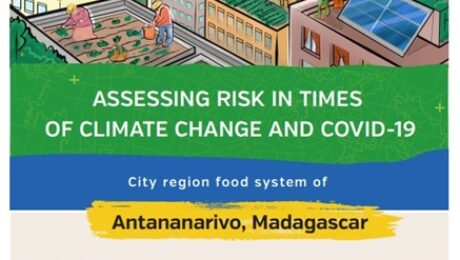
This factsheet is largely based on Thiel, F., Phillips, I. and N. Drechsel. 2019. Rapid Scan: Colombo City Region Food Systems and their vulnerability towards climate change related shocks. International Water Management Institute, Colombo, Sri Lanka, 48 pp. It can be accessed here. It provides information on the general knowledge collected by the city region food system (CRFS) project in its phase 2 regarding the assessment of risks for the CRFS of Colombo and results are based on a literature review as well as data collected by the International Water Management Institute, as the main implementation partner in the country.
- Published in CLIMATE CHANGE