
Climate change impacts and adaptation options in the agrifood system
This paper summarises the findings of the International Panel on Climate Change’s Sixth Assessment Report which runs into over 3 000 pages, focusing on the assessment’s conclusions and their effect on agrifood systems. The Assessment Reports of the International Panel on Climate Change (IPCC) are important as they provide policymakers with state of knowledge assessments on climate change, its implications, and potential future risks. These assessments also put forward adaptation and mitigation options.
- Published in CLIMATE CHANGE
Managing risks to build climate-smart and resilient agrifood value chains
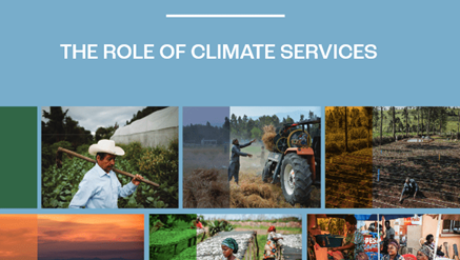
This work provides a preliminary analysis of the key climate risks affecting agrifood value chains and opportunities for climate services that reach stakeholders involved in all stages of the value chain, from agrifood production to harvest, storage and refrigeration, processing and packaging, transportation, markets, trade and consumption. Climate services provide opportunities to effectively and comprehensively mainstream climate risk management across the entire agrifood value chain, in addition to increasing sustainability and efficiency in the face of changing climate conditions.
This report provides significant primary information and recommendations on the development of climate services across the agrifood value chain with a view to systematically enhance sustainable and resilient opportunities. It also provides a basis for further research and investment funding in this area. Its findings could spark follow-up research and public and private investment.
- Published in CLIMATE CHANGE, VALUE CHAIN / MARKETS
Just-in-Time Policy Note on Agriculture and Food in Pakistan | Resilient Systems: Moving Beyond the COVID-19 Crisis

The Partnership for Agricultural Transformation in Pakistan (PAT-P) is a coalition of multilateral international agencies that aim to transform agriculture into a dynamic, competitive, efficient and climate smart sector, and to reposition it as an engine of growth in rural areas. The coalition assists the Government in implementing a policy framework and take reform actions that are potentially of high impact and politically critical.
This Just-in-Time Policy Note examines the impact of the COVID-19 pandemic on Pakistan’s food system and provides recommendations on key policy actions and adjustments to make the food systems more resilient to future shocks.
- Published in PAKISTAN
Self-evaluation and Holistic Assessment of Climate Resilience of Farmers and Pastoralists (SHARP)
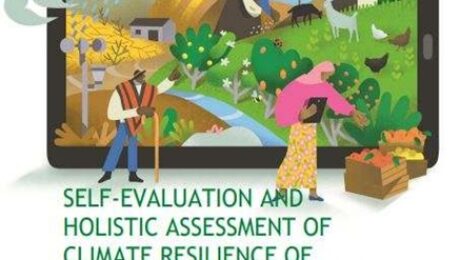
This new guidance document provides updated guidelines and tools for development practitioners and researchers on the features and use of SHARP+, describing the tool as it is today. This document does not replace the previous “Self-evaluation and Holistic Assessment of climate Resilience of farmers and Pastoralists” methodological document published in 2015 which encompasses all the theoretical grounds of the tool.
This guidance document also presents the latest version of the questionnaire, SHARP+ 2020, scoring system and tablet application based on the two technical reviews mentioned above. This document walks the reader through a step-by-step process to set up the SHARP+ assessment, adapt it to the local context, and use it to collect and analyse information about household resilience in the context of climate change.
- Published in CLIMATE CHANGE
Research Series 72: Climate change and food system activities – a review of emission trends, climate impacts and the effects of dietary change
This article reviews how food system activities contribute to climate change and how dietary changes affect food systems. It shows that while emissions from food production are increasing in most regions, emissions from land use change are decreasing. Despite these trends, land use emissions remain huge and are greater than emissions from food production in some regions.
While there is strong scientific consensus that climate change negatively affects food production, current scientific evidence is unclear about the impacts of climate change on post-production activities. This article also shows that dietary change has large potential to reduce greenhouse gas emissions. Despite its potential, the costs and feasibility of dietary change are not well understood and require further research.
Strategies to reduce emissions should focus on further reducing land use change as the current rate of reduction is inadequate to achieve a targeted reduction in greenhouse gas emissions. Strategies must also address meat consumption in regions where it consumption is excessive.
- Published in CLIMATE CHANGE
Women’s leadership and gender equality in climate action and disaster risk reduction in Africa

Despite the key roles that rural women play in food systems, in agrobiodiversity conservation, natural resource management, food production, preparation and marketing, rural women are particularly affected by the impacts of climate change due to limited access and control over resources fundamental to adaptation and limited participation in decision-making processes. Similarly, they lack equal access to productive resources needed for agricultural livelihoods, and are often the last to eat when food is scarce. Decision-making and leadership in climate action and governance are also male dominated and the decisions less likely to respond to women’s needs and wants.
It is therefore urgent to ensure that policy and programmatic response for building back better and strengthening the resilience of food systems and communities takes into account the interests and constraints of women and men from diverse social, cultural, ethnic and religious backgrounds. For this to happen, it is important to strengthen women’s leadership and participation at all levels of climate action and governance.
- Published in CLIMATE CHANGE
Building climate resilience in the Asia Pacific Region
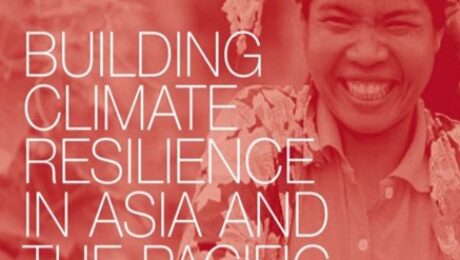
IFAD’s ASAP projects in Asia and the Pacific region offer a host of valuable lessons that can be applied in the design and implementation of other climate change adaptation projects targeting smallholder farmers and rural communities around the world.
This study examines six projects, in three principal ecosystems of the region: a mountainous region, wetlands and a river delta. It derived four main recommendations for improving the design and effectiveness of adaptation projects both in the region and else where.
- Published in CLIMATE CHANGE
Enacting theories of change for food systems transformation under climate change
In the past few years, we have seen growing calls for a transformation in global food systems in response to multiple challenges, including climate change. Food systems are responsible for a third of global greenhouse gas emissions from human activity and agricultural yields are at risk due to climate change impacts. Although many proposals have been made, there are fewer insights on what these imply for knowledge and innovation systems. We seek to advance the literature on transforming food systems under a changing climate, by identifying concrete next steps for scientists and practitioners. We do this by adapting a theory of change proposed by Campbell et al. (2018). We used the adapted theory of change to design the 5th Global Science Conference on Climate-Smart Agriculture, which brought together different stakeholders within global food systems. Through conference sessions and a survey with 262 of the participants, we validate elements of the Campbell et al. framework, identify additional elements, and offer further nuance. The findings point at nine priority areas for a transformation in food systems under climate change
- Published in CLIMATE CHANGE
Delivering Climate Change Outcomes with Agroecology in Low-and-Middle-Income Country: Evidence and Actions Needed
Key Findings
Substantial evidence exists for the impacts of agroecology in low- and middle-income countries (LMICs) on climate change adaptation.
Knowledge gaps were found for agricultural climate change mitigation, resilience to extreme weather, and agroecology approaches involving livestock, landscape redesign and multi-scalar analysis.
Farm diversification had the strongest evidence for impacts on climate change adaptation.
The evidence for agroecology’s impact on mitigation in LMICs is modest and emphasises carbon sequestration in soil and biomass.
Agroforestry had the strongest body of evidence for impacts on mitigation.
Locally relevant solutions produced through participatory processes and co-creation of knowledge with farmers improved climate change adaptation and mitigation.
- Published in CLIMATE CHANGE
Climate Change and Community Resilience
This book was conceived and given life during the COVID-19 pandemic. We editors met every week, mostly on Mondays, online from March 2020 to September 2021 often testing the patience of our families as these meetings lasted several hours at night or early morning since we were working from different time zones. We are grateful to them for their support without which this book could not have taken shape. We are thankful to all the contributors who agreed to participate in this project—including the family, friends, colleagues, and mentees of Karl-Göran Mäler and SANDEE associates.
Once the contributors came on board with the revised manuscripts after receiving comments from the reviewers, we organised a four-day online writeshop bringing together all contributing authors from seven South Asian countries and beyond with more than ten different time zones. The writeshop turned into an excellent peer review platform for all the manuscripts included in the volume, where participants provided critical and open feedback that helped improve the quality of the chapters. We thank Oberlin College for the use of their Zoom platform for the writeshop and all meetings of the editors and contributors throughout the process. We are grateful to the South Asian Network for Development and Environmental Economics (SANDEE) at the International Centre for Integrated Mountain Development (ICIMOD) for making it possible to publish this volume as an open access resource. Aunohita Mojumdar helped us with language editing, and Neesha Pradhan provided logistical support.
- Published in CLIMATE CHANGE