Transformation of our food systems – the making of a paradigm shift
In this book, the authors of the essays and short stories are illustrating, in a narrative form and their own words, the “behind the scene” stories about these and other landmark reports that have emanated from the IAASTD. It is hoped that with this book we attract the further attention of decision makers to the challenges, the solutions, and the actions necessary to address them. Food is a human right, and it is the responsibility of governments to ensure that all have access to the right quantity and quality of healthy food at an affordable price, which has been produced for the long-term from resilient systems, many of which must be rebuilt on the ruins of degraded soils, lost biodiversity and impoverished farmers. It’s high time that our food systems pay attention to the word regenerative, as sustainable and resilient systems can only function as such in fully restored ecosystems. Time is ripe to move from exploitation to management of our life supporting ecosystems.
With a major gathering planned under the auspices of the UN Secretary General, Food System Summit in 2021, managed by private foundations and private sector representatives, this book could not be timelier, bringing a strong warning that “business as usual is not an option”, and that if this is not heeded, it’s not people but the irrevocable damage to nature that will destroy our civilization. One could ask where were the initiators and leaders of the 2021 Food System Summit over the past 11 years? It is clear that food systems and the value of a “systems approach” has been suddenly (re)invented and re-interpreted. We must defend the narrative we have developed in 2009 and refined since, which is now very much in jeopardy again and keenly aware of the impacts of the cooptation of language while continuing on the same path. History has a tendency of repeating itself.
This book is a treasure trove for decision makers with any kind of responsibility across the food chain. It is also relevant to the general public as it explains clearly what the consequences of their choices are. Our hope is that decision makers, NGO officials and the wider public read this book and do their absolute best to implement its lessons – our current and all future generations will be eternally grateful if they do.
- Published in EXTENSION AND INNOVATION
The Innovation Revolution in Agriculture
This book defines innovation as “significant, positive change” that innovators work for and hope to achieve. Examples include increases in crop yields due to better management and improved seeds. Productivity growth underpins food and nutrition security, poverty reduction, and the conservation of natural resources. It arises when farmers adopt improved technologies and practices developed by R&D efforts, often paid for by governments or private investors. Adoption is the “prize.” There is no market for innovations without user adoption nor any scope for impact or investor reward. Understanding adoption is therefore key.
- Published in EXTENSION AND INNOVATION
Caste, Social Networks and Variety Adoption
Social networks influence technology diffusion but targeting formal leaders (institutional central nodes) may lead to distributional consequences. This paper analyzes the role of informal social networks in technology diffusion in a socially hierarchical caste-based society. Often, information flow and technology diffusion are constrained by social and economic boundaries where informal nodes such as caste play a very decisive role in everyday life. Proper targeting and dissemination of technology to the marginalized sections of society are very important for their development. We observed that only one-fourth of farmers cultivate newer varieties which include hybrids and recently released high yielding varieties. The results showed that individuals belonging to marginal groups are influential and act as informal leaders when they are the dominant caste in the village. Progressive farmers are found to fail in disseminating new varieties, and targeting influential informal leaders who belong to the dominant caste of the village appears to be a better strategy. Among non-dominant caste members, influential leaders belonging to Other Backward Classes (OBCs) or Scheduled Tribes (STs) are more desirable targets than other caste groups. The more concentrated a network is in terms of its caste composition, the faster will be the spread of any technology.
- Published in EXTENSION AND INNOVATION
Agricultural extension: Global status and performance in selected countries
Agricultural transformation and development are critical to the livelihoods of more than a billion small-scale farmers and other rural people in developing countries. Extension and advisory services play an important role in such transformation and can assist farmers with advice and information, brokering and facilitating innovations and relationships, and dealing with risks and disasters. Agricultural Extension: Global Status and Performance in Selected Countries provides a global overview of agricultural extension and advisory services, assesses and compares extension systems at the national and regional levels, examines the performance of extension approaches in a selected set of country cases, and shares lessons and policy insights. Drawing on both primary and secondary data, the book contributes to the literature on extension by applying a common and comprehensive framework — the “best-fit” approach — to assessments of extension systems, which allows for comparison across cases and geographies. Insights from the research support reforms — in governance, capacity, management, and advisory methods — to improve outcomes, enhance financial sustainability, and achieve greater scale. Agricultural Extension should be a valuable resource for policymakers, extension practitioners, and others concerned with agricultural development.
- Published in CONCEPTS AND PRACTICES
Co-Creating Sustainable Ways of Living 17 Stories of On-the-Ground Innovations
The Sustainable Lifestyles and Education (SLE) Programme was launched in 2014 as one of the six programmes under the UN 10-Year Framework of Programmes on Sustainable Consumption and Production Patterns (10YFP, which is now known as the One-Planet Network). The SLE Programme has supported 25 projects (of which 17 were completed by 2019) that are fostering the shift to more sustainable ways of living, based on the unique contexts of local societies.
- Published in EXTENSION AND INNOVATION
Agricultural Extension in Transition Worldwide: Policies and Strategies for Reform
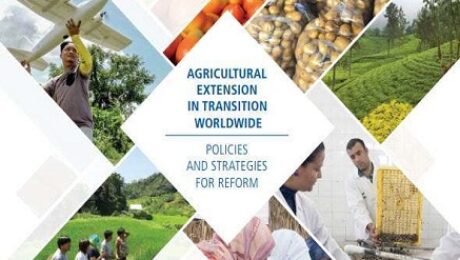
Agricultural Extension in Transition Worldwide: Policies and Strategies for Reform
Food and Agriculture Organization of the United Nations Rome, (2020)
Prepared by Magdalena Blum, Francesca Cofini and Rasheed Sulaiman V
The purposes of the modules are to review the major reforms being considered internationally – reforms that aim to change the policy and institutional structure and operations of public sector agricultural extension systems, and thus enhance a transition to better coordinated pluralistic, demand-led advisory systems. The advantages and disadvantages of each aspect of these reforms are examined and illustrated by the selected case studies. The modules provide a foundation for extension reform affecting the entire set-up and mode of operation of agricultural extension. This review of reforms is intended to provide insights for senior-level officials and others interested in the development of agricultural advisory systems. The modules review trends, concepts and experiences, and, as such, are not intended to be prescriptive, or to adhere necessarily to any one point of view, but instead to provide a basis for informed decision-making by government policy-makers and senior management of extension and advisory services, as well as agricultural advisors.
- Published in CONCEPTS AND PRACTICES, EXTENSION AND INNOVATION, POLICY
Role of Social Scientists in National Agricultural Research System (NARS)
Social sciences when reinforced with biological sciences will provide human face of science, because science is for society and hence science without human face is body without soul. Social sciences study the nature, measurement and analysis of needs and aspirations of people so that science can continuously remain relevant and contribute to the welfare of mankind. Specifically, social sciences help organize research and education around societal problems in scientific disciplines by improving focus, design, implementation, evaluation and demonstration of evidences of impact. It is to be noted that despite having so many scientists, scientific establishments and universities in India, our science index is low, human development index is low and our hunger index is alarmingly high. It is time that social sciences of agricultural economics, agricultural extension, agricultural statistics, food and nutrition and home sciences get due attention to play their role as ears and eyes of the National Agricultural Research and Education System (NARES). It has been largely felt that while social sciences could play a larger role currently within NARES, their role is not adequately recognized and more needs to be done to duly recognize them and strengthen the capacities of social scientists.
- Published in EXTENSION AND INNOVATION
Building resilience to climate change-related and other disasters in Ethiopia
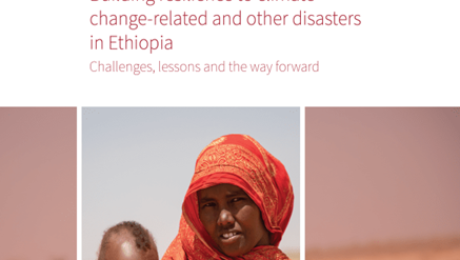
Ethiopia is exposed to a wide range of disasters associated with the country’s extensive dependence on rainfed subsistence agriculture, climate change, resource degradation, diverse geoclimatic and socio-economic conditions and conflicts. Drought and floods are the major challenges, but a number of other threats affect communities and livelihoods. These include conflict, desert locust, fall armyworm, frost and hail, crop pests and diseases, livestock diseases, human diseases, landslides, earthquakes, and urban and forest fires.
Every source of evidence suggests that Ethiopia would feel the human and economic impacts of climate change intensely, and the impacts will only continue to grow if the country continues a business-as-usual approach to crisis response, and will not be able to manage the increasing scale of the challenges. Thus, there is call by all stakeholders for a paradigm shift in the way the country deals with communities at risk, in order to take preventive actions to reduce exposure, vulnerability and impact at local level. This requires moving away from a reactive system that solely focuses on drought and supply of life-saving humanitarian relief and emergency responses during disasters to a comprehensive proactive disaster and climate risk management approach, including climate change adaptation, among which are interventions to enhance livelihood diversification, social protection programmes and risk transfer mechanisms.
Furthermore, resilient agrifood systems support should include a range of proven interventions that are context-relevant and cover the whole agrifood system, such as increase in fertilizer use where appropriate and high-yielding and drought-tolerant seeds, strengthened extension and advisory systems at the kebele (local) level through the use of farmer field schools and pastoral field schools, expansion of access to credit, livelihood diversification, risk transfer mechanism and institutional development that link short-term emergency relief to long-term development pathways. This approach is essential for building resilience to natural hazard and human-induced disasters resulting in food insecurity challenges.
- Published in Uncategorized
Water quality in agriculture: Risks and risk mitigation
This publication, Water Quality in Agriculture: Risks and Risk Mitigation, emphasizes technical solutions and good agricultural practices, including risk mitigation measures suitable for the contexts of differently resourced institutions working in rural as well as urban and peri-urban settings in low- and middle-income countries. With a focus on sustainability of the overall land use system, the guidelines also cover possible downstream impacts of farm-level decisions. As each country has a range of site-specific conditions related to climate, soil and water quality, crop type and variety, as well as management options, subnational adjustments to the presented guidelines are recommended.
Water Quality in Agriculture: Risks and Risk Mitigation, is intended for use by national and subnational governmental authorities, farm and project managers, extension officers, consultants and engineers to evaluate water quality data, and identify potential problems and solutions related to water quality. The presented guidelines will also be of value to the scientific research community and university students.
- Published in CLIMATE CHANGE
Dry zone of Sri Lanka – Climate-smart intensification of upland and lowland crop production systems
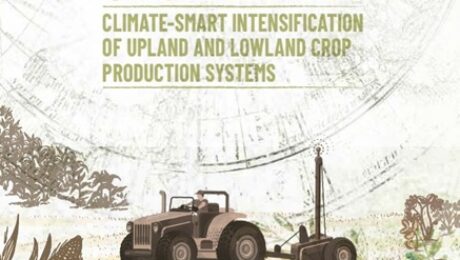
This guide explores the climate-smart intensification of upland and lowland crop production systems in the dry-zone of Sri Lanka and provides technical guidance to achieve the productive objectives of selected strategic crops (as deemed relevant by the Government of Sri Lanka). The first edition focuses on maize and groundnut upland production systems and on rice lowland production. It provides a quick reference for information on crop production and soil management, including crop varieties, nutritional requirements and field equipment. As climate change will result in wider and more severe occurrences of plant pests, the guide relies on integrated pest management practices adapted to climate change. Optimizing the production of these crops calls for the diversification of crop systems using intercrops and cover crops. Additionally, sustainable mechanization is regarded as an essential agricultural production input to optimize labour and land productivity for the sustainable and profitable development of the agriculture sector. Therefore, the guide describes the innovative equipment needed for the sustainable optimization of crop production. To ensure coherent guidance and advice on sustainable farming practices, inputs and technologies, the guide has been developed in cooperation with all stakeholders working in the agriculture sector of Sri Lanka.
- Published in CLIMATE CHANGE, SRI LANKA