An Analysis of Agriculture Production Scenario in Nepal
Agriculture and Livestock Development is used to calculate the annual average yield of agricultural crops. The result shows that increment in production of cereal crops and vegetables is greater than area due to availability of irrigation facilities and fertilizers, use of improved and hybrid seeds and technological knowledge among the farmers. The percentage increase in area, production and productivity of cash crop in 2018/19 compared to 2009/10 is 18%, 34.38% and 14.1% respectively. The technological innovations and use of high yielding varieties has played a major role to increase production of pulses in Nepal. Among pulses, the winter crop lentil dominates in production (65.76%) as well as in area coverage (62.93%). There is greater increment in areas of fruits compared to production leading to 2% decrease in productivity of fruits in 2018/19 compared to 2009/10. Summer fruits shared 63% and 67.1% of total fruit productive areas and total fruit production respectively. More than 75% of total summer fruits area and production is shared by mango and banana. Citrus fruits shared about 23% of total fruit productive area and production. Winter fruits shared 13.22% of total productive area and 9.80% of total fruit production. In addition to modern technology, status of soil fertility, crop management practices, quality of seeds, climate and incidence of pests and diseases are responsible for fluctuation of agricultural production in Nepal.
- Published in NEPAL
Value chain and policy interventions to accelerate adoption of zero tillage in rice-wheat farming systems across the Indo-Gangetic Plains

This project aimed to accelerate the adoption of Zero-Till seed drills (including the Happy Seeder) to reduce crop residue burning and boost sustainable food energy water security.
Stubble burning, combined with the traditional practice of tillage prior to crop establishment has a detrimental impact on soil health and quality. The development of Conservation Agriculture (CA) practices, characterised by the direct sowing of crop into standing (retained) stubble, is termed Zero-Till and provides a real alternative to traditional farming techniques. The Happy Seeder developed specifically for the intensive rice-wheat cropping system of the Indo-Gangetic Plains (with significant project investment by ACIAR) is presented as the single most viable option for direct sowing of wheat crops into standing rice stubble. As State Governments move towards enforcing a ban of the burning of stubble across India, it is likely that there will be an increased motivation by farmers to adopt the Happy Seeder. However, experience to date has indicated that Happy Seeder adoption has been less than optimal, there is a need to identify how farmer adoption can be accelerated.
- Published in POLICY
Agricultural land underutilisation in the hills of Nepal: Investigating socio-environmental pathways of change

Human development is possible only within planetary boundaries The tendency to pit economic development against the environment has led the world towards a dead end. Several voices called to reinterweave them, just as humanity is interwoven with the health of nonhuman natures and ultimately the planet. The notion of responsible wellbeing was suggested as being cognizant of the implications of consumption and accountability and the ways to factor in the interests of future generations. Responsible wellbeing for people and planet is about internalizing environmental and social costs in the true value of goods and services, recognizing that the value extends well beyond the monetary. It is about conceptualizing the systems underpinning humanity as socioecological or socionatural systems—and development as positive change in those systems. If we wish to celebrate another 30 years of human development, attention must extend to all societies and to the behaviour of citizens who have already achieved high levels of human development on traditional measures”
- Published in NEPAL
The next frontier-Human development and the Anthropocene
Human development is possible only within planetary boundaries The tendency to pit economic development against the environment has led the world towards a dead end. Several voices called to reinterweave them, just as humanity is interwoven with the health of nonhuman natures and ultimately the planet. The notion of responsible wellbeing was suggested as being cognizant of the implications of consumption and accountability and the ways to factor in the interests of future generations. Responsible wellbeing for people and planet is about internalizing environmental and social costs in the true value of goods and services, recognizing that the value extends well beyond the monetary. It is about conceptualizing the systems underpinning humanity as socioecological or socionatural systems—and development as positive change in those systems. If we wish to celebrate another 30 years of human development, attention must extend to all societies and to the behaviour of citizens who have already achieved high levels of human development on traditional measures”
- Published in POLICY
Coordination in multi-actor policy implementation

There is an increasing involvement of a number of non-state actors such as NGOs and community based organisations (CBOs) in poverty alleviation programmes. This calls for greater coordination among the actors for the effective implementation of such programmes. This article explores the various factors influencing coordination in multi-actor policy implementation, using a case study of a rural livelihoods enhancement programme implemented in the state of Odisha in India. The findings suggest that programme design, frequency of interaction, interdependency among actors, credibility of NGOs, leadership and personal traits have helped in coordination among state, NGOs and CBOs.
- Published in POLICY
The small livestock advantage: A sustainable entry point for addressing SDGs in rural areas
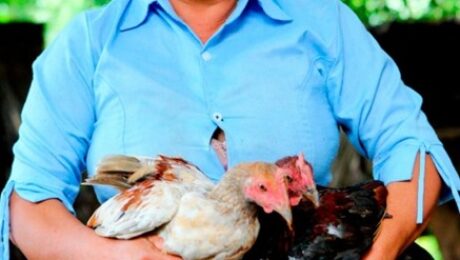
This report presents selected achievements and lessons learned from the growing portfolio of small livestock investments supported by IFAD.
There is no universal and unique definition of “small livestock”, but in the context of this publication, the following species have been considered: poultry, swine, small ruminants, guinea pigs, and rabbits.
The Introduction presents IFAD’s key messages on investing in small livestock development. The Case Studies section features a review of five relevant projects from IFAD’s portfolio (in Afghanistan, Lesotho, Nepal, Senegal and Venezuela) that provide concrete examples of how IFAD is working to support small-scale farmers. Lessons learned from IFAD’s support for this sector, and some potential ways forward, conclude the report.
- Published in LIVESTOCK / FISHERIES, POLICY
Issues in Policy Implementation: Insights from an E-survey on Operational Guidelines for 10,000 FPO
Public policy reviews tend to concentrate on either policy formulation or ex-post implementation appraisal, often leaving the policymaking black box unchanged. Stakeholder consultations on the mundane guideline details also hold the key to better policy execution. The Covid 19 pandemic complicates consultative policy-making processes and could lead to weak stakeholder buy-in. This paper highlights an innovation of a recent key policy document in Indian agriculture- the operational guidelines for promoting 10,000 Farmer Producer Organisations (FPOs) by 2024. Key stakeholders, representatives from FPOs and their federations, sponsoring and training organisations, donors and other ecosystem players with substantial experience working with FPOs were invited to participate and express their views on the policy document through a detailed e-survey in July 2020. The paper presents esurvey results showing a high degree of involvement and optimism about the new policy.
A strong endorsement of the long-term vision along with milestone-based support and enhanced funding arrangements in the new scheme emerges. However, respondents also voiced their concerns on the “One District One Product” blueprint and the grassroots level implementation capacity of the proposed new institutional architecture, the overall role of the National Project Management Agency (NPMA) and its ability to roll out a diversified portfolio through implementing agencies and Community Based Business Organisations (CBBOs). Respondents were also surprised by the absence of policy support for the large number of FPOs formed in the last few years; they appear to have been left to fend for themselves despite significant efforts in social mobilisation and incubating member-owned collective enterprises for growth and sustainability.
- Published in PRODUCER ORGANISATION
Responsible investments in agriculture and food systems
This Practical Handbook is directed to Members of Parliament and Parliamentary Advisors, who are considered “change agents”. It provides a comprehensive and systematic overview of the role that Parliamentarians can play in the creation of reliable, coherent, and transparent “enabling environments” in the range of areas related to investment in agriculture and food systems.
The Handbook does so, not through a catalog of prescriptions, but through guidance notes, examples of good practices, and very practical indications. It does not aim to provide a blueprint to be implemented by each Parliament but rather it sets out key stages of processes and mechanisms for MPs and advisors to consider while promoting responsible investment in agriculture and food systems.
- Published in POLICY
Strengthening One Health Approaches for Countries in the Asia Pacific Region
Recognizing that the Asia and Pacific region was undergoing profound changes as a result of economic growth, urbanization, migration and climate change, and considering the effect of these changes on agricultural and food systems and the environment with consequences for food production, safety and availability in the coming decades, the 33 rd Asia and the Pacific Regional Conference, held in 2016 requested a Regional Initiative on One Health Priority areas developing FAO’s earlier work on zoonotic diseases and anti microbial resistance ( were identified A Regional Workshop involving 17 countries at which One Health issues in each country were discussed, gaps identified and plans of action proposed was held in Bangkok in October 2017 Following this, three countries Nepal, Papua New Guinea and Viet Nam expressed strong interest in taking part in a regional project Papua New Guinea requested support to raise awareness of food safety and improve biosecurity, including plant health, animal health, hygiene and public health measures Nepal requested assistance in reducing risks to human and occupational health through sustainable agriculture practices and improved food safety to advance nutrition within food systems, in addition to ongoing work on zoonotic diseases and AMR Viet Nam requested support to build capacity and update legal frameworks for pesticide use regulations, residue control for trade and safe and sustainable agriculture production Addressing the use of chemicals for chronic plant health problems and the resulting damage to the ecosystem and improving food safety to advance nutrition within food systems were named as priorities However, at the time the project was implemented, FAO Vietnam did not have an FAO Representative in place Communications between FAO Regional Office for Asia and the Pacific and the Viet Nam country office and the concerned line ministry were considerably delayed By the time a FAO Representative was appointed, much of the implementation period had elapsed and there was little time available to deliver the originally planned activities In addition, the Government of Sri Lanka expressed interest that FAO provide technical support to develop a food safety policy and strategic plan for the country The external review of the food safety system in Sri Lanka, which was conducted by FAO in 2016 identified the non availability of a food safety policy and strategic framework as one of the key gaps in the country’s food safety programme Therefore, the Government requested that the World Health Organization ( and FAO).
- Published in POLICY
Research-policy linkages: Empirical evidence from agroeconomic research in India
Policy-making processes in developing countries often continue to operate devoid of evidence. In this study, we explore the research-policy linkages between the agroeconomic research system (AERS) and the agricultural policy system (APS) in India. Specifically, we examine questions directed to the Ministry of Agriculture and Farmers’ Welfare in the two houses of the national parliament—the House of the People (Lok Sabha) and the Council of States (Rajya Sabha)—and filter them for key issues that confront the APS. In addition, using the list of research articles published in two major national agricultural economics journals, we examine the alignment of the AERS toward addressing pressing policy issues. We use 6,465 questions raised by elected representatives in the parliamentary houses and 377 research articles, both during the period 2014–2018. We use machine learning techniques for information retrieval because the required information is hidden as non-numerical text. Using tag clouds (lists of words by frequency), we identify key divergences between the concerns of the APS and the research focus of the AERS, and explore their linkages. To broaden our understanding, we employ latent Dirichlet allocation, a natural language processing technique that identifies crucial issues and automates their classification under appropriate clusters, to examine synergies between the research and policy systems. Results show remarkable alignment between the AERS and the APS, invalidating the two-communities hypothesis. We identify persistent issues in the policy domain that require the support of the research system, as well as potential areas for research system realignment.
- Published in POLICY