
2021 Global food policy report: Transforming food systems after COVID-19

The coronavirus pandemic has upended local, national, and global food systems, and put the Sustainable Development Goals further out of reach. But lessons from the world’s response to the pandemic can help address future shocks and contribute to food system change. In the 2021 Global Food Policy Report, IFPRI researchers and other food policy experts explore the impacts of the pandemic and government policy responses, particularly for the poor and disadvantaged, and consider what this means for transforming our food systems to be healthy, resilient, efficient, sustainable, and inclusive. Chapters in the report look at balancing health and economic policies, promoting healthy diets and nutrition, strengthening social protection policies and inclusion, integrating natural resource protection into food sector policies, and enhancing the contribution of the private sector. Regional sections look at the diverse experiences around the world, and a special section on finance looks at innovative ways of funding food system transformation. Critical questions addressed include: – Who felt the greatest impact from falling incomes and food system disruptions caused by the pandemic? – How can countries find an effective balance among health, economic, and social policies in the face of crisis? – How did lockdowns affect diet quality and quantity in rural and urban areas? – Do national social protection systems such as cash transfers have the capacity to protect poor and vulnerable groups in a global crisis? – Can better integration of agricultural and ecosystem polices help prevent the next pandemic? – How did companies accelerate ongoing trends in digitalization and integration to keep food supply chains moving? – What different challenges did the pandemic spark in Asia, Africa, and Latin America and how did these regions respond?
- Published in POLICY
Perspectives on Global Development 2021

Since its first edition in 2010, the OECD Development Centre’s Perspectives on Global Development report has tracked development trends and policy priorities in developing countries. This new report examines the phenomenon of discontent. Between the global financial crisis and the COVID-19 pandemic, discontent surged around the world. It was especially evident in middle-income countries and was often most acute amongst the middle classes that have emerged in developing countries over recent decades. The report explores the economic, political and sociological drivers of discontent and argues that building back better from the COVID-19 pandemic in developing countries will require approaches that simultaneously improve citizens’ well-being, promote productive transformation and strengthen social cohesion. The report concludes by examining the international dimension of discontent and demonstrates how weaknesses and imbalances in the present multilateral system are eroding humankind’s capacity for collective action in the face of global threats, notably the climate crisis. The rise in discontent has exposed failings in prevailing economic, social and political models at all levels: addressing discontent means fixing these systems, and doing so in an inclusive and sustainable manner.
- Published in POLICY
Estimating the Global Investment Gap in Research and Innovation for Sustainable Agriculture Intensification in the Global South
Sustainable food production needs to increase if it is to meet the rising and evolving food demands caused by growing populations, increasing incomes and urbanization. However, it faces numerous challenges. Competition for water resources is increasing – not only between people and the natural environment, but between cities and rural areas as well. Overuse of water due to wasteful irrigation management is worsening water scarcity. Climate change is bringing higher temperatures and changing precipitation patterns, as well as a higher likelihood of increased weather variability and extreme events. At the same time, agriculture is a major contributor to greenhouse gas (GHG) emissions, so sustainable agriculture intensification also needs to address climate change by reducing GHG emissions and sequestering carbon.
- Published in POLICY
Five metaphors for steering institutional change

Creating a sustainable world will require significant change in the way our institutions function and act. What follows is one attempt to outline some lessons learned—in the form of five metaphors—that I have found useful in trying to foster institutional change in universities.
The metaphors grew out of a 12-year process—from 1999 to 2011—of trying to get the Centre for Interactive Research on Sustainability (CIRS) created at the University of British Columbia (UBC). CIRS was designed to be a living lab of sustainability and net positive in four environmental and three human ways (it eventually succeeded in five of these goals). Creating it proved much more challenging than expected. What became evident as we tried to get this building and its programs conceived, funded, approved, designed and implemented, is that there were many institutional road-blocks, grounded in the normal decision-making practices and institutional culture of the university, that worked against our efforts.
- Published in POLICY
Strengthened seed regulations and certification system in Afghanistan-2020
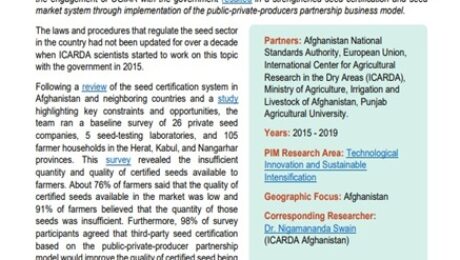
Improving smallholder farmers’ access to high-quality seeds is among the key objectives of CGIAR. Achieving this goal requires a conducive policy and regulatory environment. Partnerships between public and private stakeholders for seed certification have proven successful in many countries. In Afghanistan, the engagement of CGIAR with the government resulted in a strengthened seed certification and seed market system through implementation of the public-private-producers partnership business model.
- Published in AFGHANISTAN
Farm Sector Laws and their Implications for Punjab Agriculture
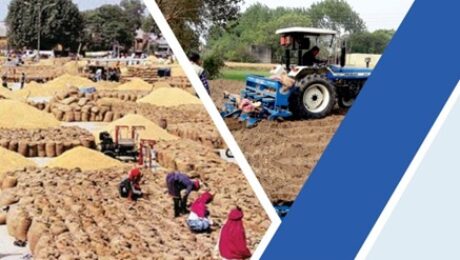
Three farm sector bills were passed by the Parliament of India in September, 2020 and turned into laws. These laws are named as
following:
- The Farmers’ Produce Trade and Commerce (Promotion
and Facilitation) Act, 2020. - Farmers (Empowerment & Protection) Agreement of
Price Assurance and farm Services Act, 2020. - Essential Commodities (Amendment) Act, 2020.
The first law aims at creating an ecosystem for providing freedom to farmers and traders to trade with free choice. The second law aims at empowering the farmers to engage with the agri-business firms and other important players of agricultural value chains by providing a national framework for mutual agreements. The third law removes the basic food items from the list of essential commodities in order to reduce excessive regulatory restrictions on private business operations in agriculture.
- Published in POLICY
Groundwater of Afghanistan (potential capacity, scarcity, security issues, and solutions)
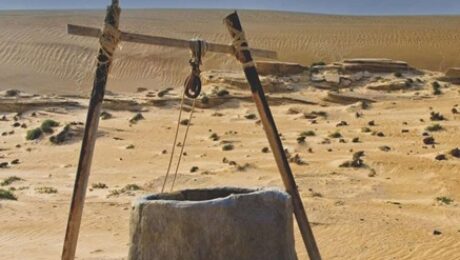
Afghanistan is a landlocked mountainous country with plains in the north and southwest, which is described as being located within South and Central Asia. Water is the lifeblood of the people of Afghanistan, not just for living but also for the economy, which has traditionally been dominated by agriculture. Over 80% of the country’s water resources originate within the Hindu Kush mountain ranges at altitudes over 2000 m. The mountains perform as natural water storage, with snow throughout the winter and snowmelt within the summer that supports perennial flow of all the major rivers.
- Published in AFGHANISTAN
Investing in rural people in Sri Lanka
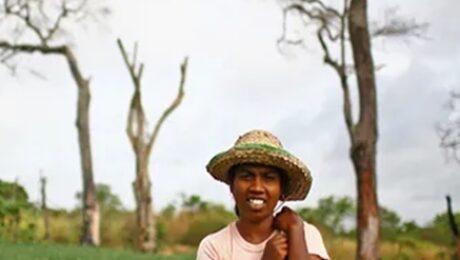
IFAD is one of Sri Lanka’s longest-standing development partners. In 1978, the Kirindi Oya Irrigation and Settlement Project was launched as IFAD’s first investment in the country. The goal was to increase food production, provide employment opportunities and raise rural incomes.
Altogether, IFAD has implemented 18 projects in Sri Lanka, benefiting 614,832 households at a total cost of US$590.6 million (with IFAD providing US$337.9 million in financing).
Today, IFAD continues to actively engage in Sri Lanka, with investments aimed at contributing to the achievement of the SDGs, specifically in the areas of food security, sustainable agricultural production and productivity, and improved income opportunities for rural households.
- Published in SRI LANKA
Accelerating progress towards SDG2 – Policy effectiveness analysis
The Food and Nutrition Security Impact, Resilience, Sustainability and Transformation (FIRST) Programme represents a partnership between the Food and Agriculture Organization of the United Nations (FAO) and the European Union (EU). In 2018, the partnership agreed on the need to have a policy effectiveness analysis conducted in most of the FIRST countries.
As policy implementation rather than formulation is repeatedly raised as one of Pakistan’s challenges, this assessment considered the implementation challenges of specific policy processes relevant to the FAO-EU partnership in the country, rather than the entire suite of relevant policies. It considered the necessary conditions to move forward and how best to meet these conditions, including through more strategic resource allocation and more effective approaches to building institutional capacity.
- Published in PAKISTAN
Agricultural Transformation in Nepal
This book addresses some key strategic questions related to agriculture in the context of major contemporary developments and emerging challenges in Nepal such as the changing role of agriculture with economic growth, structural transformation in reducing poverty, improving nutritional outcomes, and addressing the challenges of climate change. The book also suggests policy measures to improve the delivery of critical inputs and services and ensure the participation of marginal and smallholders in high-value chains. Further, it discusses how the new federal system and governance structure will affect the delivery of agricultural technology and services.